
CBSE Subject Dislike Simulator
Adjust the sliders to reflect how much each factor contributes to your study stress. The tool will calculate which subject is likely to be your "most disliked" based on the article's analysis of student sentiment.
Your Pain Points
Your Result
Adjust the sliders to see your result
Most Likely Disliked Subject:
Ask any teenager walking out of a CBSE (Central Board of Secondary Education) school in India what they dread most, and you will likely hear one name come up again and again. While opinions vary by individual strength and interest, data from student surveys and teacher feedback consistently points to a clear winner for the title of "most hated" subject. It is not just about difficulty; it is about the perceived relevance, the teaching method, and the sheer volume of memorization required.
The answer usually lands on Biology for science students or History for humanities tracks, but there is a strong case for Physics being the most feared due to its abstract nature. However, if we look at the broader sentiment across grades 9 through 12, Biology often takes the crown for being the most disliked because of the overwhelming amount of rote learning involved. Let's break down why these subjects generate such strong negative reactions and what that tells us about the current education system.
The Biology Burden: Why Memorization Kills Interest
For students choosing the PCM-B stream (Physics, Chemistry, Mathematics, and Biology), Biology is often cited as the most exhausting subject. The reason is simple: the volume of content. Unlike Physics, where you can solve problems using formulas, or Mathematics, where logic prevails, Biology requires you to remember thousands of facts, diagrams, and processes.
Imagine having to memorize the entire structure of the human heart, the steps of photosynthesis, the classification of plants, and the mechanisms of genetic inheritance all at once. The NCERT textbooks, which are the bible for CBSE exams, are dense. Students complain that they spend hours highlighting and rewriting notes, only to feel like they have forgotten half of it by the time the exam arrives. This leads to burnout. When learning feels like a data-entry task rather than an exploration of life sciences, disengagement is inevitable.
Furthermore, the stakes are incredibly high. For those aiming for medical entrance exams like NEET (National Eligibility cum Entrance Test), Biology carries significant weight. This pressure transforms a potentially fascinating subject into a source of chronic anxiety. The dislike isn't necessarily for the subject matter itself-many students love understanding how the body works-but for the way it is tested and taught.
Physics: The Abstract Nightmare
If Biology is the burden of memory, Physics is the nightmare of abstraction. Many students find themselves staring at equations for electromagnetism or optics without being able to visualize what is actually happening. The gap between theoretical concepts and practical application is wide in many classrooms.
Teachers often rush through complex derivations, assuming students can fill in the logical gaps. For a student who struggles with visualization, this approach is disastrous. You cannot simply memorize Physics; you must understand the underlying principles. If that foundation cracks early on, the rest of the syllabus becomes impenetrable. This creates a cycle of frustration. Students feel stupid for not getting it, teachers feel frustrated by the lack of engagement, and parents worry about their child's future in engineering or medicine.
The dislike for Physics is also fueled by the perception that it is "useless" for daily life. How often do you calculate projectile motion when buying groceries? This question, while unfair to the fundamental importance of physics in technology, highlights a disconnect in how the subject is presented. Without real-world context, Physics feels like a puzzle designed solely to fail students.
History and Political Science: The Boring Narrative
For students opting for the Humanities stream, the hatred shifts toward History and Political Science. The primary complaint here is boredom. These subjects are often taught as a series of dates, names, and events that need to be regurgitated in long-form answers.
Consider the Indian National Movement chapter. It involves remembering hundreds of leaders, conferences, resolutions, and dates. While these events are crucial for understanding modern India, the pedagogical approach often strips away the drama and human element. Instead of discussing the ideological debates or the personal sacrifices of freedom fighters, classes focus on ticking off bullet points for exam preparation. This turns history into a chore rather than a story.
Additionally, the evaluation criteria in CBSE for humanities subjects can be subjective. Writing a perfect answer requires not just knowledge but also the ability to structure arguments in a specific way that appeals to examiners. This ambiguity adds another layer of stress. Students worry that even if they know the material, they might lose marks because their presentation wasn't "standard" enough.
The Role of Teaching Methodology
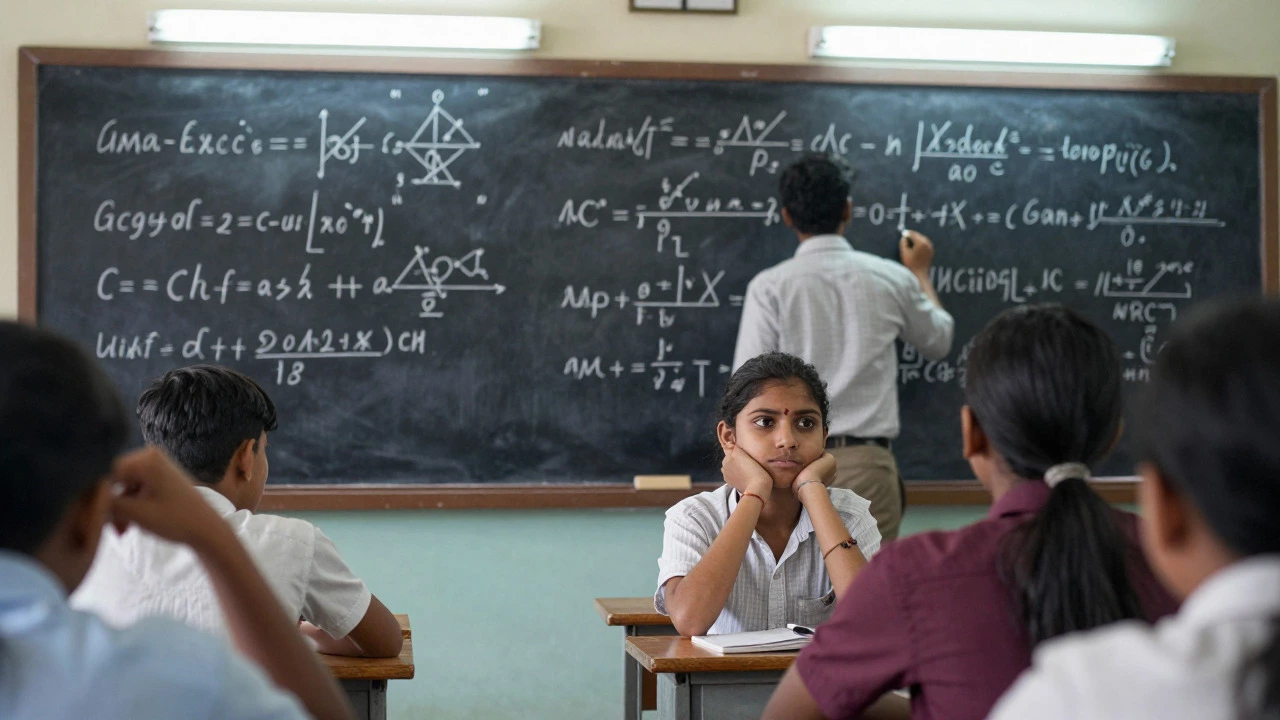
It is important to note that the dislike for these subjects is not inherent to the disciplines themselves. It is largely a result of rote learning culture prevalent in many schools. The CBSE system, while comprehensive, often prioritizes coverage over depth. Teachers are under pressure to complete the syllabus before board exams, leading to a race against time.
In this race, critical thinking takes a backseat. There is little room for debate in History, no time for experiments in Biology beyond the prescribed lab manuals, and no space for curiosity-driven questions in Physics. When education becomes transactional-studying only to pass-the joy of learning evaporates. Students begin to associate these subjects with stress, sleepless nights, and parental disappointment.
Moreover, the lack of diverse teaching aids exacerbates the problem. While some progressive schools use simulations, videos, and field trips, many still rely on chalk-and-talk methods. For visual and kinesthetic learners, this style is ineffective. They struggle to connect with the material, leading to a sense of alienation and eventual dislike.
Comparison of Student Sentiment Across Subjects
| Subject | Primary Pain Point | Learning Style Required | Common Student Complaint |
|---|---|---|---|
| Biology | Vast volume of content | Rote memorization | "Too much to remember, too little time." |
| Physics | Abstract concepts | Logical reasoning & Visualization | "I don't see the point of these formulas." |
| History | Dry delivery of facts | Narrative recall | "It's just dates and names." |
| Chemistry | Split focus (Organic/Inorganic) | Mixed (Logic + Memory) | "Organic chemistry is unpredictable." |
Chemistry: The Middle Child Dilemma
Chemistry often suffers from being the "middle child" of science. It combines the memorization of Biology with the logic of Physics, but students feel it gets the worst of both worlds. Organic Chemistry, in particular, is notorious for its unpredictability. Reactions don't always follow straightforward rules; exceptions abound, and mechanisms can seem arbitrary without a deep conceptual grasp.
Students frequently express frustration with the organic section because it requires both creativity and precision. You need to visualize molecular structures and predict how they will interact, but you also need to memorize reagents and conditions. This dual demand is mentally taxing. Inorganic Chemistry, on the other hand, is pure memorization of periodic trends and compounds, which feels tedious after dealing with the complexity of organic reactions.
How to Change the Narrative
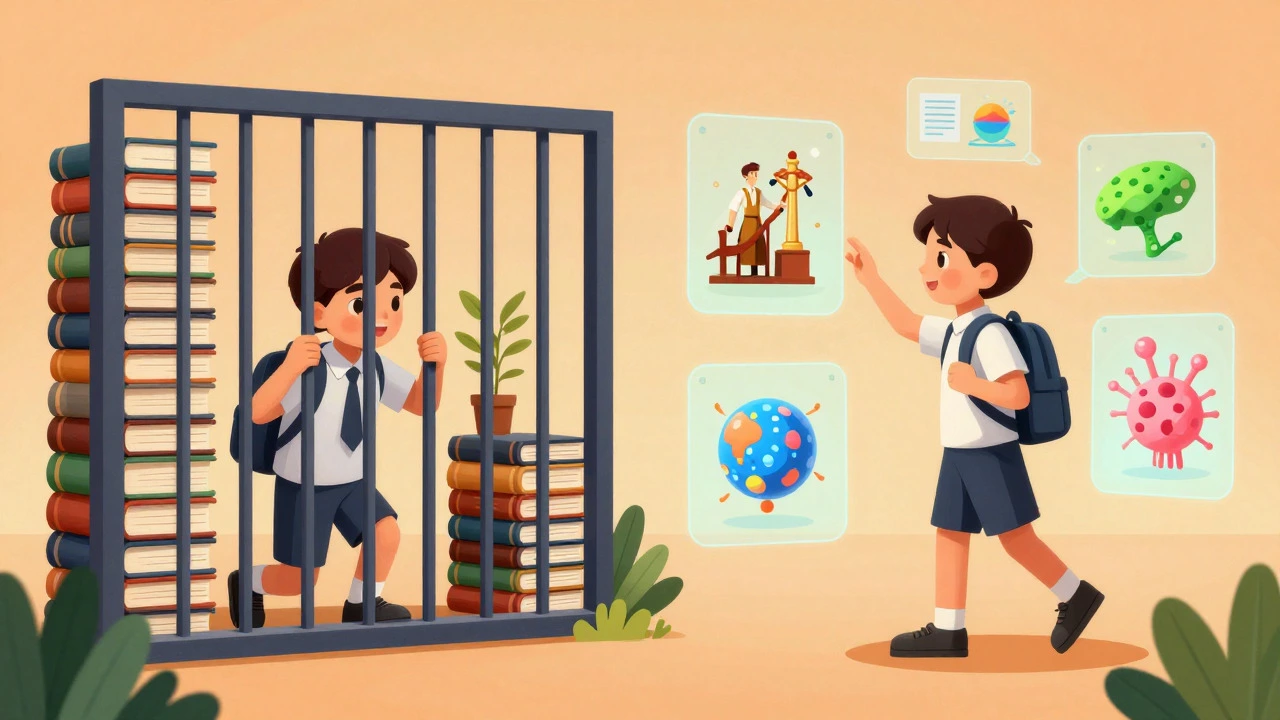
So, how do we turn dislike into interest? The solution lies in shifting the focus from outcomes to processes. For Biology, integrating more interactive tools like virtual dissections or 3D models can help students visualize systems rather than just memorizing labels. For Physics, connecting concepts to everyday phenomena-like explaining electricity through household wiring-can make it relevant. For History, encouraging debates and role-plays can bring the past to life.
Parents and teachers also play a crucial role. Instead of focusing solely on marks, they should encourage curiosity. Ask your child why they think a historical event happened the way it did, or how a biological process affects their own health. When students feel empowered to explore, the fear diminishes. The goal should be to create lifelong learners, not just exam-takers.
Conclusion: It's Not the Subject, It's the System
Ultimately, the "most disliked" subject is a symptom of a larger issue within the educational framework. Whether it is Biology, Physics, or History, the common thread is the pressure to perform under rigid constraints. By addressing the teaching methods and reducing the emphasis on rote memorization, we can transform these subjects from sources of dread into areas of genuine interest. After all, every student has the potential to find beauty in science and history-it just takes the right approach to unlock it.
Is Biology really harder than Physics?
Difficulty is subjective. Biology requires extensive memorization of facts and diagrams, which can be overwhelming for students who prefer logical problem-solving. Physics, on the other hand, demands strong conceptual understanding and mathematical skills. Students who struggle with memory may find Biology harder, while those weak in math may find Physics more challenging.
Why do students hate History so much?
Students often dislike History because it is taught as a list of dates and events rather than a narrative of human experience. The requirement to write long, structured answers in exams adds pressure, making it feel like a chore rather than an engaging story.
Can I skip Biology if I want to become an engineer?
Yes, if you are taking the PCM (Physics, Chemistry, Mathematics) stream, Biology is not mandatory for most engineering courses. However, some interdisciplinary fields like biomedical engineering may benefit from a background in Biology. Check specific university requirements for your chosen course.
What is the best way to study for NEET?
Focus on NCERT textbooks for Biology and Chemistry, as most questions are derived directly from them. For Physics, practice numerical problems regularly. Create short notes for quick revision and take mock tests to improve speed and accuracy. Consistency is key.
Does the CBSE board change its syllabus frequently?
The CBSE syllabus undergoes minor revisions periodically to align with national educational goals and global standards. Major changes are less frequent but can occur. Always refer to the latest official notification from the CBSE website for the current academic year.