
Free Course ROI Calculator
Answer these questions honestly to determine if you should start a free course today or consider paid alternatives.
You see the ad: "Harvard CS50 for free." You click. You watch ten minutes of David Malan’s energetic lecture. Then life happens, and you never log back in. Sound familiar?
Here is the uncomfortable truth about free college courses: they are worth it only if you treat them like a job, not a hobby. Most people quit because they lack structure, not because the content is bad. But for those who stick with it, these courses can save thousands of pounds and land real jobs. Let’s break down exactly when they help, when they hurt your wallet, and how to actually finish one.
The Hidden Costs of "Free" Learning
Nothing is truly free. When you enroll in a course on platforms like Coursera or edX, you pay with time and opportunity cost. The average completion rate for massive open online courses (MOOCs) hovers around 5-15%. That means 85 out of 100 people start but don’t finish.
If you spend six months trying to learn Python through a free track, only to quit halfway, you haven’t just lost time. You’ve delayed your career pivot by half a year. Compare that to a paid bootcamp where the financial pressure forces you to show up. The "free" option becomes expensive if it leads to procrastination.
However, if you have high self-discipline, the return on investment is massive. You get access to Ivy League-level instruction without the $50,000 tuition bill. The key is recognizing whether you are the type of learner who needs external accountability or internal drive.
Certificates vs. Knowledge: What Do Employers Actually Care About?
This is the biggest misconception. A certificate from a free audit track usually doesn’t exist. To get a verified certificate on most platforms, you must pay between £30 and £100. Is that paper worth it?
For entry-level roles in tech or digital marketing, yes, it helps. It proves you completed the work. But for senior roles, no one cares about a certificate from MIT OpenCourseWare. They care about your portfolio.
| Feature | Audit Track (Free) | Verified Certificate (Paid) |
|---|---|---|
| Cost | £0 | £40-£100 |
| Access to Graded Assignments | No (usually) | Yes |
| Employer Recognition | Low (shows interest) | Moderate (shows completion) |
| Best For | Skill acquisition, curiosity | CV boost, LinkedIn profile |
Employers in Manchester, London, or anywhere else look for proof of skill. If you take a free course and build a project using what you learned, that project outweighs any certificate. Use the free knowledge to create something tangible. Post it on GitHub. Write a blog post about it. That is your real credential.
Which Platforms Actually Deliver Quality?
Not all free courses are created equal. Some are glorified YouTube playlists. Others are rigorous academic programs. Here is how the major players stack up in 2026:
- edX: Founded by Harvard and MIT. Best for hard sciences, computer science, and engineering. The content is dense and academic. If you want to understand how algorithms work, go here. CS50x is the gold standard.
- Coursera: Partners with Stanford, Yale, and others. Stronger in business, psychology, and soft skills. Their interface is user-friendly, which helps with retention. Good for professionals wanting to upskill quickly.
- Khan Academy: Completely free, forever. No certificates, no upsells. Perfect for foundational math, science, and early coding concepts. Don’t expect advanced university-level depth, but the basics are unbeatable.
- FutureLearn: UK-based, headquartered in Milton Keynes. Great for humanities, social sciences, and teacher training. Often features shorter, more digestible modules than American platforms.
Avoid random Udemy courses marked "free" unless you check reviews carefully. Many are teasers for longer paid courses or outdated content from five years ago. Stick to platforms with university partnerships for credibility.
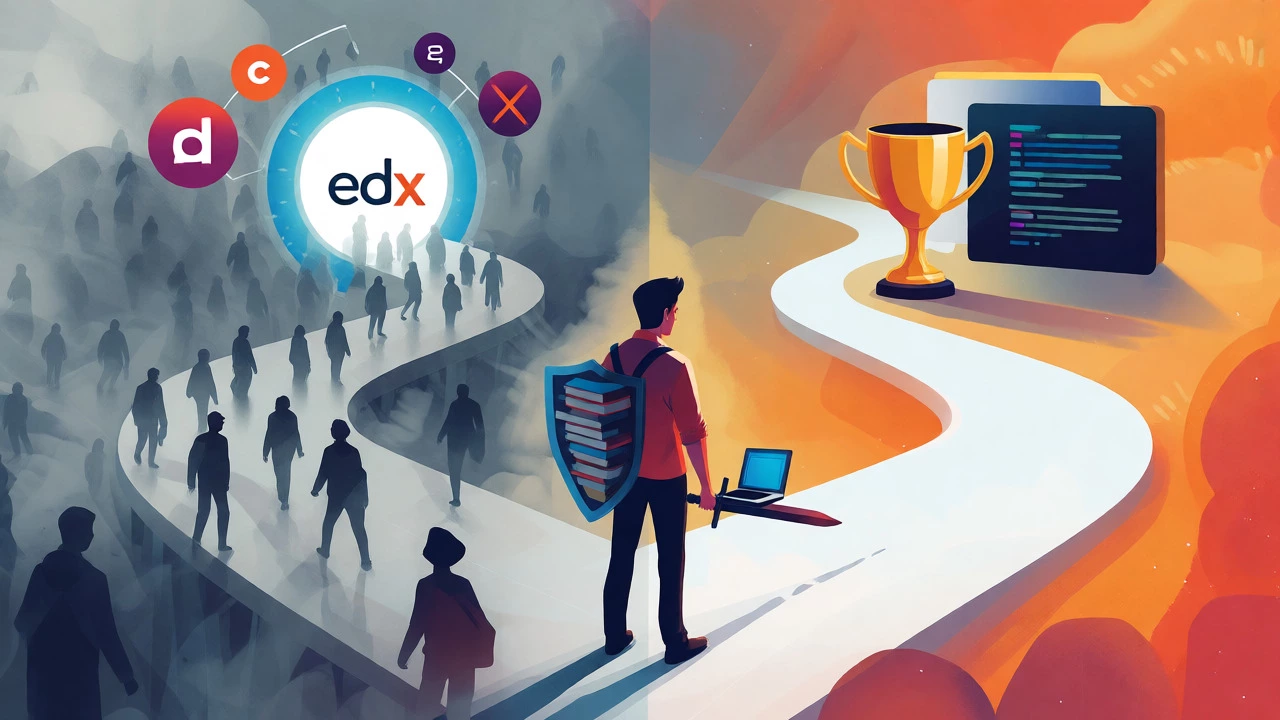
The Discipline Gap: Why You Will Quit (And How to Stop)
You will quit because the format fails you. University lectures are designed for captive audiences. Online videos are designed for people who can pause to make tea. This freedom kills motivation.
To beat the dropout rate, use these three rules:
- Treat it like a class schedule. Block out Tuesday and Thursday evenings at 7 PM. Put it in your calendar. Tell a friend you will send them a summary every week. Social pressure works.
- Build as you go. Don’t just watch. Code. Write. Design. If the course teaches web development, build a simple site by week two. Passive watching leads to passive forgetting.
- Ignore the perfection trap. You don’t need to understand every minute of every lecture. If you grasp the concept, move on. Stuck on a tricky section? Skip it and come back later. Momentum matters more than mastery in the first month.
I know people who failed three times before finishing a data science track. The fourth time, they committed to 30 minutes a day instead of five hours on Sundays. Small, consistent habits beat heroic weekend efforts every time.
When Free Courses Are Not Enough
There are limits. Free courses rarely offer networking opportunities. In traditional universities, you meet peers, professors, and industry contacts. Online, you are often isolated. If you are changing careers into a field like law or medicine, where licensing is required, free courses won’t cut it. You need accredited degrees.
Also, feedback is scarce. On paid tracks, you might get peer-reviewed assignments. On free audits, you grade yourself. If you are learning a language, speaking with natives is crucial. Apps like Duolingo are fun, but they won’t make you fluent. You need human interaction.
Consider paying if:
- You need mentorship or direct instructor feedback.
- The course offers career services or job placement assistance.
- You require an accredited certificate for professional licensing.
Otherwise, start free. See if you enjoy the subject. If you do, upgrade to the paid version for the certificate and community access. This minimizes financial risk while maximizing potential reward.

Real Success Stories: It Can Work
Let’s look at actual outcomes. A friend of mine in Leeds took free cybersecurity courses on Cybrary and Coursera. He spent six months studying after work. He didn’t buy a single certificate initially. Instead, he set up a home lab, practiced penetration testing tools, and documented his findings on Medium. He landed a junior security analyst role within eight months. His portfolio did the talking.
Another case: A marketing manager wanted to learn SQL. She used free resources from Mode Analytics and Khan Academy. She built dashboards for her current company. Her boss noticed the initiative. She got promoted. No degree needed. Just applied knowledge.
These examples share one trait: application. They didn’t just consume content; they produced value. That is the metric that matters.
Your Action Plan
So, are free college courses worth it? Yes, if you approach them strategically. Here is your checklist:
- Pick one platform based on your goal (edX for tech, Coursera for business).
- Choose one course. Do not enroll in five at once.
- Commit to 30 minutes daily. Consistency beats intensity.
- Build one project related to the course material.
- Evaluate after four weeks. If you’re bored, drop it guilt-free. If you’re engaged, consider paying for the certificate.
The barrier to entry has never been lower. The barrier to completion remains high. Bridge that gap, and you’ll find that free education is the best deal in town.
Do employers respect free online course certificates?
It depends on the role. For entry-level positions, a verified certificate shows initiative and basic competency. However, most hiring managers prioritize portfolios and practical experience over certificates. Use free courses to build projects that demonstrate your skills, then list the course as supplementary evidence.
Can I earn college credit from free online courses?
Generally, no. Auditing a course on edX or Coursera does not grant transferable university credit. Some platforms offer ACE-recommended credits for specific paid courses, but these are rare. If you need formal credit for a degree, look into accredited online colleges rather than MOOCs.
What is the biggest mistake people make with free courses?
Enrolling in too many courses simultaneously. People sign up for five subjects because they are free, then burn out trying to keep up. Focus on one course at a time. Finish it or consciously drop it before starting another. Depth beats breadth in online learning.
Are free courses good for career changers?
Yes, especially for fields like programming, data analysis, and digital marketing. These industries value demonstrable skills over pedigree. Free courses allow you to test-drive a new career path with zero financial risk. If you enjoy the work, you can then invest in specialized certifications or bootcamps.
How long does it take to complete a typical free online course?
Most MOOCs are designed for 4-8 weeks of study at 5-10 hours per week. However, since you control the pace, it could take longer. Self-paced courses allow flexibility, but setting a realistic deadline helps maintain momentum. Aim for 30-60 minutes daily rather than binge-watching on weekends.