CBSE Enrollment & Competition Estimator
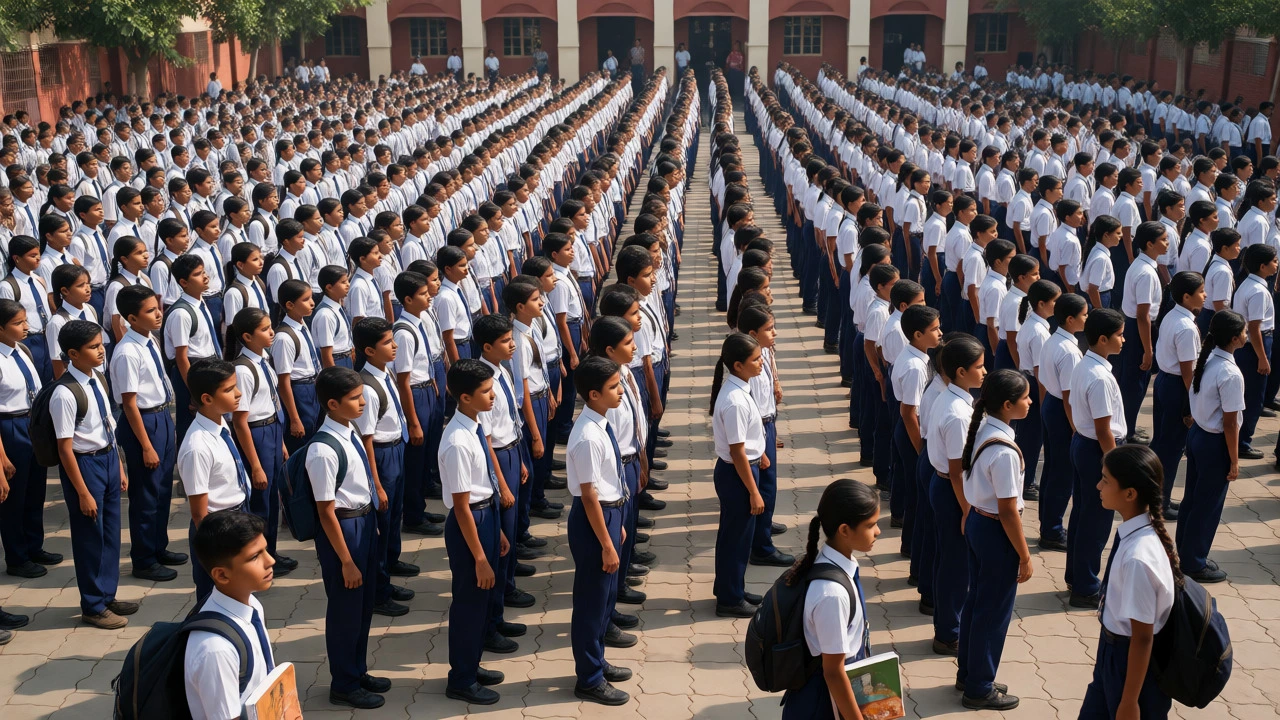
Students studying under the same standardized syllabus nationwide.
Ratio of total enrolled students to actual exam candidates per year.
Visualizing the dominance of CBSE compared to other major boards in India.
Ever wondered just how massive the Central Board of Secondary Education (CBSE) really is? If you are a parent weighing school options, a student curious about your peer group size, or an educator analyzing trends, knowing the exact number of learners under this board matters. As of the latest academic year data available for 2025-2026, the CBSE serves approximately 4.8 million students across more than 27,000 affiliated schools. That is nearly half the population of many European countries, all studying from the same syllabus.
This isn't just a random guess. The National Council of Educational Research and Training (NCERT) and the Ministry of Education release these figures annually. But why does this number fluctuate? And what does it mean for you if your child is enrolled in a CBSE school?
The Current CBSE Student Population Snapshot
Let's look at the hard numbers. In the 2023-2024 academic session, the CBSE registered around 4.6 million candidates for its various examinations. By projecting growth rates seen over the last decade, the figure for the current 2025-2026 cycle sits comfortably near the 4.8 to 5 million mark. This includes students from Class 1 through Class 12 in affiliated schools, as well as those appearing for standalone exams like the National Eligibility cum Entrance Test (NEET) preparation cohorts that often overlap with CBSE curricula.
It is crucial to distinguish between "enrolled students" and "exam candidates." Not every student in a CBSE school takes the board exams in the same year. However, the total footprint is staggering. To put it in perspective, the International Baccalaureate (IB) has roughly 500,000 students globally. ICSE (Council for the Indian School Certificate Examinations) serves about 1.5 million. CBSE dominates the landscape, largely because it is the default choice for families who move frequently due to government jobs or private sector transfers.
| Board Name | Estimated Students | Affiliated Schools | Primary Focus |
|---|---|---|---|
| CBSE | ~4.8 Million | ~27,500 | National Standardization |
| ICSE | ~1.5 Million | ~2,500 | Literary & Comprehensive |
| State Boards | ~25+ Million | ~500,000+ | Regional Language & Culture |
| International Baccalaureate | ~500,000 | ~300 | Global Mobility |
Why Is CBSE So Popular Among Families?
You might ask, why do so many people choose this specific board? It comes down to one word: transferability. If your job requires you to move from Mumbai to Delhi, or from Bangalore to Kolkata, switching schools mid-year is a nightmare. With state boards, the curriculum changes drastically across borders. You might learn calculus in Grade 9 in Maharashtra but not until Grade 11 in Tamil Nadu. CBSE solves this. The syllabus remains consistent nationwide. This uniformity creates a massive network effect-more schools join because parents demand it, and more parents choose it because schools offer it.
Another driver is competitive exam alignment. Most Indian engineering and medical entrance exams, including JEE Main and NEET UG, base their questions heavily on NCERT textbooks. Since CBSE mandates NCERT materials, students get a head start. They aren't learning two different sets of facts; they are studying the same material used for their board exams and their future career gatekeepers. This efficiency appeals to ambitious parents who want to minimize redundancy in their child's education.
Breakdown by Region and Demographics
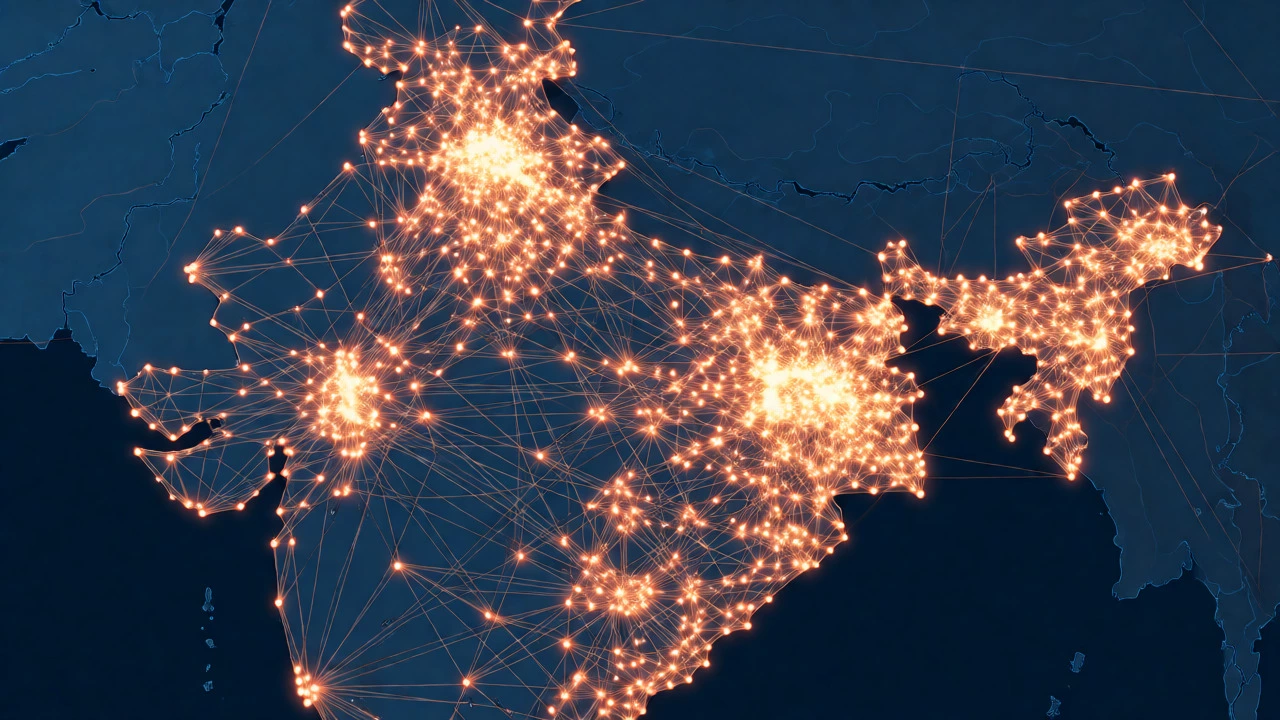
Where exactly are these 4.8 million students located? It is not evenly spread. Uttar Pradesh, Maharashtra, and Rajasthan consistently report the highest number of CBSE-affiliated institutions. Why? These states have large populations and significant government infrastructure, including Kendriya Vidyalayas (KVs) and Jawahar Navodaya Vidyalayas (JNVs). KVs alone account for hundreds of thousands of students. These are central government schools that follow the CBSE pattern strictly.
Urban centers dominate the private CBSE sector. Cities like Delhi NCR, Hyderabad, Pune, and Chennai have dense clusters of private CBSE schools. Rural areas see a rise too, thanks to online learning platforms making quality CBSE content accessible. However, the concentration remains high in metropolitan areas where private employers operate multiple branches. A family working for a multinational corporation will likely find a CBSE school near any major office location, whereas finding an IB school in a Tier-2 city might be impossible.
Trends Influencing Future Enrollment Numbers
The number of CBSE students isn't static. Several factors are pushing these numbers up. First, the implementation of the New Education Policy (NEP) 2020 encourages standardized assessment frameworks. While NEP allows flexibility, CBSE has adapted quickly, integrating competency-based questions. Parents trust this transition because CBSE has decades of experience handling policy shifts without disrupting exam schedules.
Secondly, digital adoption plays a role. During the pandemic, CBSE accelerated its use of digital assessments and online portals. Schools that successfully navigated this shift retained their enrollments. Those that didn't lost students to competitors. Now, hybrid learning models are standard. This technological readiness makes CBSE attractive to tech-savvy parents who want their children comfortable with digital tools early on.
However, there is competition. State boards are upgrading their curricula to match global standards. Some are introducing coding and robotics earlier. This might slow CBSE's growth rate slightly in certain regions. Yet, the brand loyalty remains strong. Once a family enters the CBSE ecosystem, they rarely leave unless moving abroad entirely.
What Does This Mean for Your Child’s Competition?
If you are worried about your child being one face in a crowd of millions, relax. While 4.8 million sounds huge, the actual competition for top ranks in Class 10 and 12 is calculated per cohort. Each year, roughly 2.5 million students appear for the Class 10 board exam. The evaluation is relative to this group. High scores are achievable because grading curves adjust based on performance distribution.
Moreover, university admissions don't just look at board percentages anymore. Institutions increasingly value holistic profiles. Internships, sports, arts, and project work matter. The sheer volume of CBSE students means there are abundant resources-tutors, study groups, online forums, and past paper archives. You are never studying alone. The community support system is robust precisely because the user base is so large.
Key Takeaways for Parents and Educators
- Scale Matters: With ~4.8 million students, CBSE offers unmatched resource availability and peer networking opportunities.
- Consistency is Key: The national uniformity of the syllabus reduces stress for relocating families.
- Exam Alignment: Direct correlation with JEE/NEET curricula provides a strategic advantage for science-stream students.
- Check Local Availability: While popular, ensure a reputable CBSE school exists within a reasonable commute distance before committing.
Is the CBSE student count increasing or decreasing?
The CBSE student count has generally shown a steady upward trend over the last decade, growing from approximately 3.5 million in 2015 to nearly 4.8 million in 2025. This growth is driven by urbanization, the expansion of Kendriya Vidyalayas, and the preference for a nationally recognized curriculum among mobile workforce families.
How does CBSE compare to ICSE in terms of student numbers?
CBSE serves significantly more students than ICSE. While CBSE has around 4.8 million students, ICSE caters to approximately 1.5 million. CBSE is more widespread geographically, especially in smaller towns and government-run schools, whereas ICSE tends to be concentrated in larger cities and private institutions.
Do all CBSE students take the board exams?
No, only students in Classes 10 and 12 take the final board examinations administered by CBSE. Students in Classes 1 through 9 undergo internal assessments and periodic tests as per CBSE guidelines, but they do not sit for external board exams until Class 10.
Which state has the most CBSE students?
Uttar Pradesh typically has the highest number of CBSE-affiliated schools and students, followed closely by Maharashtra and Rajasthan. This is due to the large population base and the presence of numerous Kendriya Vidyalayas and private institutions in these regions.
Does the number of students affect the difficulty of CBSE exams?
Not directly. The difficulty level is set by the question paper setters based on the syllabus. However, the normalization process used in some contexts ensures fairness across different batches. The large number of students means more data points for statistical analysis, helping maintain consistent standards year over year.