
Job Fit Calculator
Find Your Path
Select your target role to see what skills you need and how long to learn them.
If you’re staring at your screen wondering how to turn three months into a career boost, you’re not alone. People are quitting dead-end jobs, switching careers, or just trying to get out of unemployment - and they need results, not theory. The good news? You can learn real, marketable skills in 90 days that employers are actively hiring for right now. No degree. No years of school. Just focused learning and practice.
Start with what’s actually hiring
Forget about learning everything. Focus on what companies are paying for. In 2025, the jobs that pay well and don’t require a four-year degree are mostly in tech support, digital services, and hands-on tech roles. You don’t need to become a software engineer. You need to solve a specific problem employers have - and that’s what gets you hired.Look at job boards in your area. Search for roles like “IT Support Specialist,” “Digital Marketing Assistant,” or “Data Entry Analyst.” Now check the skills they ask for. You’ll see the same few names over and over: Google Workspace, Microsoft Excel, Canva, HubSpot, Shopify, QuickBooks, and basic HTML. These aren’t fancy. They’re practical. And you can learn them in weeks, not years.
Choose one path and stick to it
Trying to learn web design, data analysis, and social media marketing at the same time? That’s how people burn out. Pick one track. Here are three realistic options that lead to jobs in under 90 days:- Digital Marketing Assistant - Learn Google Ads, Meta Ads Manager, email marketing with Mailchimp, and basic analytics. Build three small ad campaigns for fake businesses (use free tools like Canva and Google Sheets). Add them to a simple portfolio.
- IT Support Specialist - Master Windows and macOS troubleshooting, remote desktop tools, Google Workspace admin basics, and helpdesk ticketing systems. Practice on a second-hand laptop you break and fix. Document every fix.
- Freelance Data Entry & Admin - Get fluent in Excel (pivot tables, VLOOKUP, conditional formatting), Google Sheets, and QuickBooks. Take free courses on data cleaning. Offer to help local small businesses clean up their spreadsheets for free - then ask for a reference.
Each of these paths has clear entry-level jobs. Companies hire people who can show they’ve done the work - not just passed a quiz.
Use free, high-quality courses - no fluff
You don’t need to pay for a $500 course. Here’s where real learners go:- Google Career Certificates - Free for the first month on Coursera. The IT Support and Data Analytics certificates are recognized by Google, IBM, and over 150 employers.
- HubSpot Academy - Free certifications in inbound marketing, email marketing, and CRM. They even give you a badge you can put on LinkedIn.
- Microsoft Learn - Free, self-paced modules on Excel, Power BI, and Windows administration. No sign-up needed for basics.
- YouTube - Search for “Excel pivot tables for beginners” or “how to set up Google Ads campaign.” Stick to channels like Leila Gharani (Excel), Brian Dean (SEO), or Kevin Stratvert (tech support).
Don’t watch 20 videos. Watch one. Do it. Then move to the next. Practice beats theory every time.
Build something real - even if it’s small
Employers don’t care if you finished a course. They care if you can do the job. That’s why your portfolio matters more than your resume.Here’s how to build proof in 30 days:
- If you’re learning digital marketing: Run a $5 ad campaign for a local bakery or charity. Track clicks, cost per lead, and results. Take screenshots. Write a one-page summary: “How I Got 12 New Customers for a Local Café Using $5.”
- If you’re learning IT support: Fix a friend’s printer, reset a forgotten password, or set up a shared Google Drive for a small club. Record the steps. Make a 5-minute video explaining what you did.
- If you’re learning data entry: Find an old Excel file online (like a public dataset from a government site). Clean it up - remove duplicates, fix formatting, add formulas. Upload it to GitHub or Google Drive and share the link.
This isn’t a project for your resume. This is proof you can do the work. And that’s what gets you the interview.
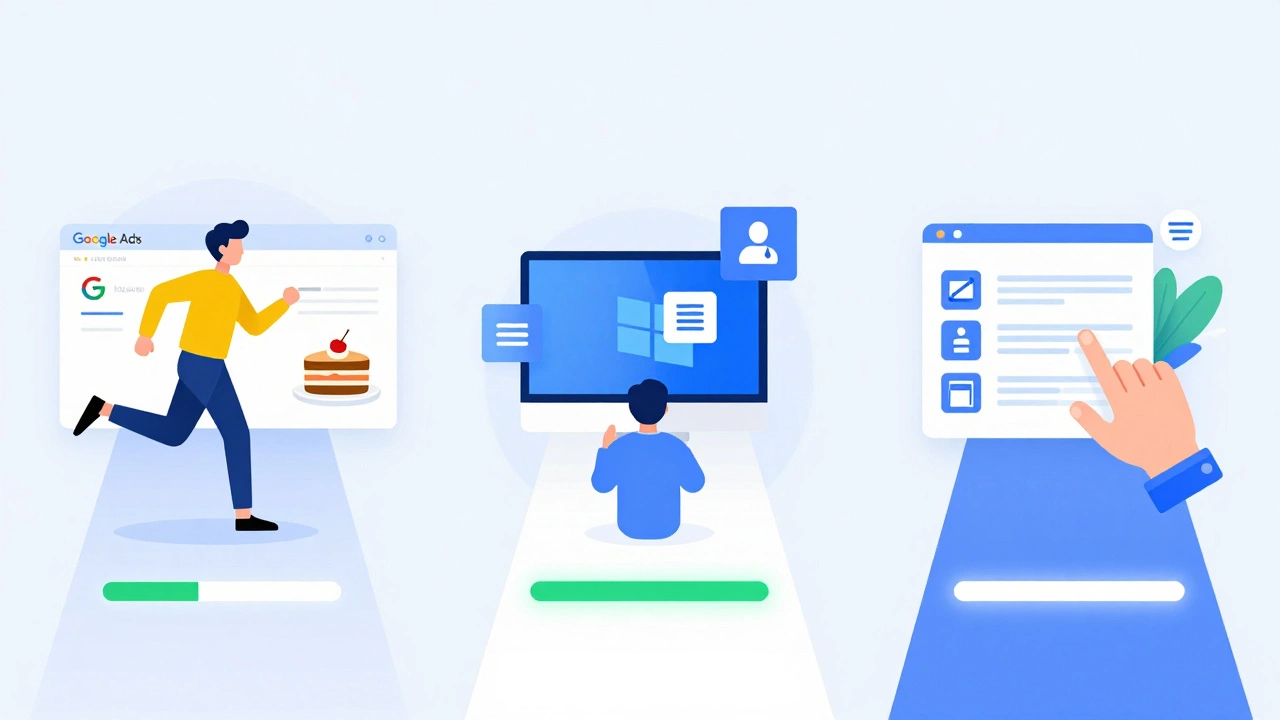
Network like you mean it
You won’t get hired by applying to 50 job postings. You’ll get hired because someone remembers you.Here’s how to make that happen in 3 months:
- Join one local Facebook group for small business owners in your city. Offer to help someone fix their Google Business Profile. Do it for free. Ask for a quick testimonial.
- Go to one free networking event per month. Not a fancy conference. Just a local chamber of commerce coffee meet-up. Bring your portfolio on your phone. Say: “I’m learning how to help small businesses with tech. Can I show you what I’ve done?”
- Message three people on LinkedIn who work in the role you want. Don’t ask for a job. Ask: “What’s one thing you wish new hires knew before starting?” Most will reply. Thank them. Keep in touch.
People hire people they know - or at least remember. Be the person who showed up, helped, and followed up.
Apply to the right jobs - not the ones you think you’re qualified for
Don’t apply for “Junior Web Developer” if you’ve never written code. Apply for:- “Administrative Assistant with Tech Skills”
- “Customer Support Specialist (Remote)”
- “Marketing Coordinator (Entry Level)”
- “Data Entry Clerk (Excel Required)”
These roles often don’t require experience - just the ability to learn fast and follow instructions. And guess what? You’ve been doing that for the last 90 days.
When you apply, don’t write a generic cover letter. Write one sentence: “I learned Google Ads and ran a $5 campaign that got 12 new customers for a local business - here’s what I did.” Then link to your portfolio. That’s more powerful than a degree.
What to avoid
Don’t waste time on:- Learning Python unless you’re going into data analysis or automation
- Getting a coding bootcamp certificate unless you’re targeting software roles (they take 6+ months)
- Watching YouTube for hours without doing anything
- Trying to be “well-rounded.” Be good at one thing.
Focus. Practice. Show proof. Repeat.
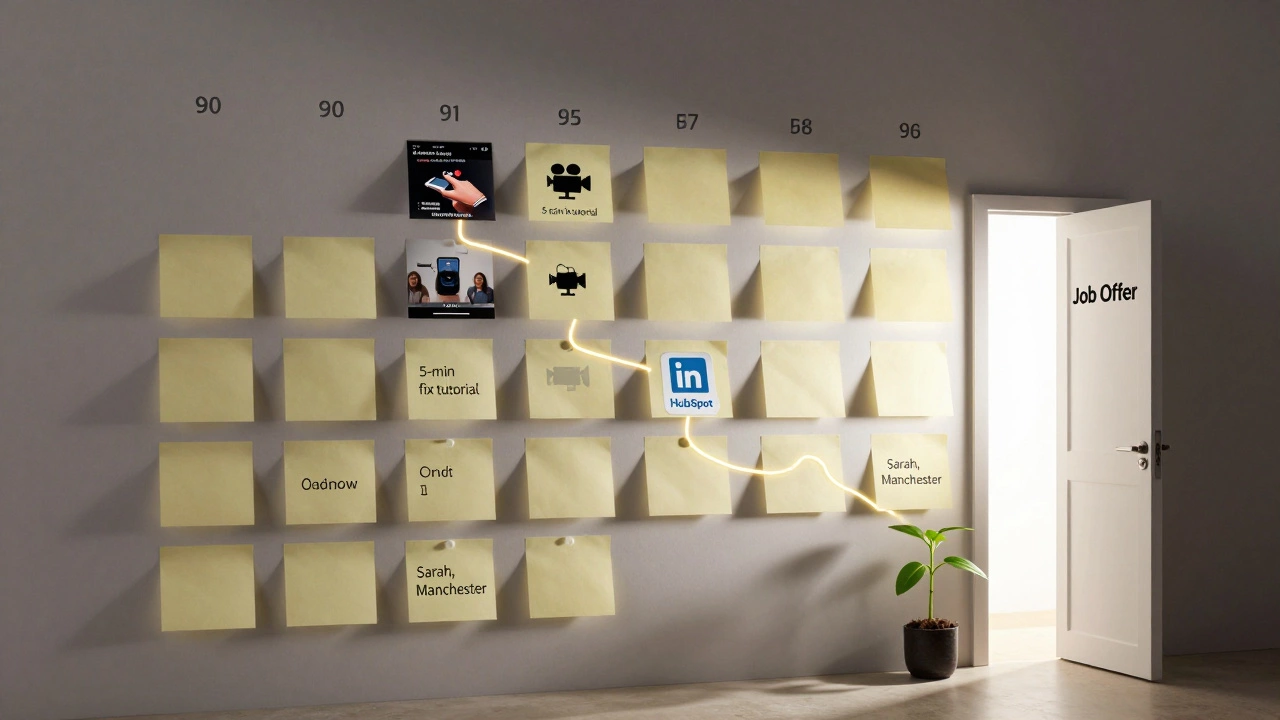
Real example: Sarah from Manchester
Sarah was working in a call center, making £10.50 an hour. She wanted out. In January 2025, she picked “Digital Marketing Assistant.” She spent 1 hour a day, 5 days a week. She did:- Google Career Certificate in Digital Marketing (3 weeks)
- HubSpot Email Marketing Certification (1 week)
- Created a fake campaign for a local bakery using Canva and Google Ads (2 weeks)
- Volunteered to manage Facebook ads for a friend’s pet-sitting business (3 weeks)
By the end of March, she applied to five jobs. She got three interviews. One offer: £18/hour as a Marketing Assistant at a small agency. No degree. No experience. Just proof she could do the work.
Next steps: Your 90-day plan
Here’s what to do this week:- Choose one path from the three above.
- Find the free course for it (Google, HubSpot, Microsoft Learn).
- Block 1 hour a day, 5 days a week. Set a timer.
- By week 2, start building your first small project.
- By week 6, have your portfolio ready - even if it’s just three screenshots and a one-page summary.
- By week 10, start applying to jobs. Don’t wait until you’re “ready.”
You don’t need to be perfect. You just need to be ready to start.
Can I really get a job in 3 months with no experience?
Yes - if you focus on roles that don’t require experience. Jobs like IT support, data entry, customer service, and digital marketing assistants are hiring people who can prove they’ve done the work, not those with degrees. Employers care more about your portfolio than your resume.
What’s the fastest skill to learn for a high-paying job?
Microsoft Excel - especially pivot tables, VLOOKUP, and data cleaning. Companies across every industry need people who can turn messy data into clear reports. You can learn this in 2-3 weeks and start applying to jobs paying £25K-£35K in the UK.
Should I pay for online courses?
No - not at first. Google, Microsoft, and HubSpot offer free, industry-recognized certifications. Paying for a course is only worth it if you need a certificate to apply for a specific job - and even then, check if a free one works first.
What if I don’t have a computer?
Most libraries in the UK offer free computer access. You can also get a refurbished laptop for under £100 from organizations like Computer Aid or The Restart Project. You don’t need the latest model - just one that runs Chrome and Excel.
How do I know which job to pick?
Look at job ads on Indeed or LinkedIn. Search for “entry level” and “no experience required.” Count how many mention Excel, Google Workspace, or Canva. Pick the skill that shows up most often in your area. That’s your best bet.