Online Learning Platform Finder
Find Your Perfect Learning Platform
Answer a few questions to get personalized recommendations for the best online learning platform for you in 2025.
If you're looking to learn something new-whether it's coding, marketing, or how to speak Spanish-you don't need to enroll in a university. The right online learning platform can give you the same skills, often faster and cheaper. But with so many out there, which ones actually deliver? Not all platforms are built the same. Some are great for certificates, others for hands-on projects, and a few are perfect if you're just curious. Here are the four online learning platforms that stand out in 2025 based on real user results, course depth, and how well they actually help people get ahead.
Coursera: The University-Backed Choice
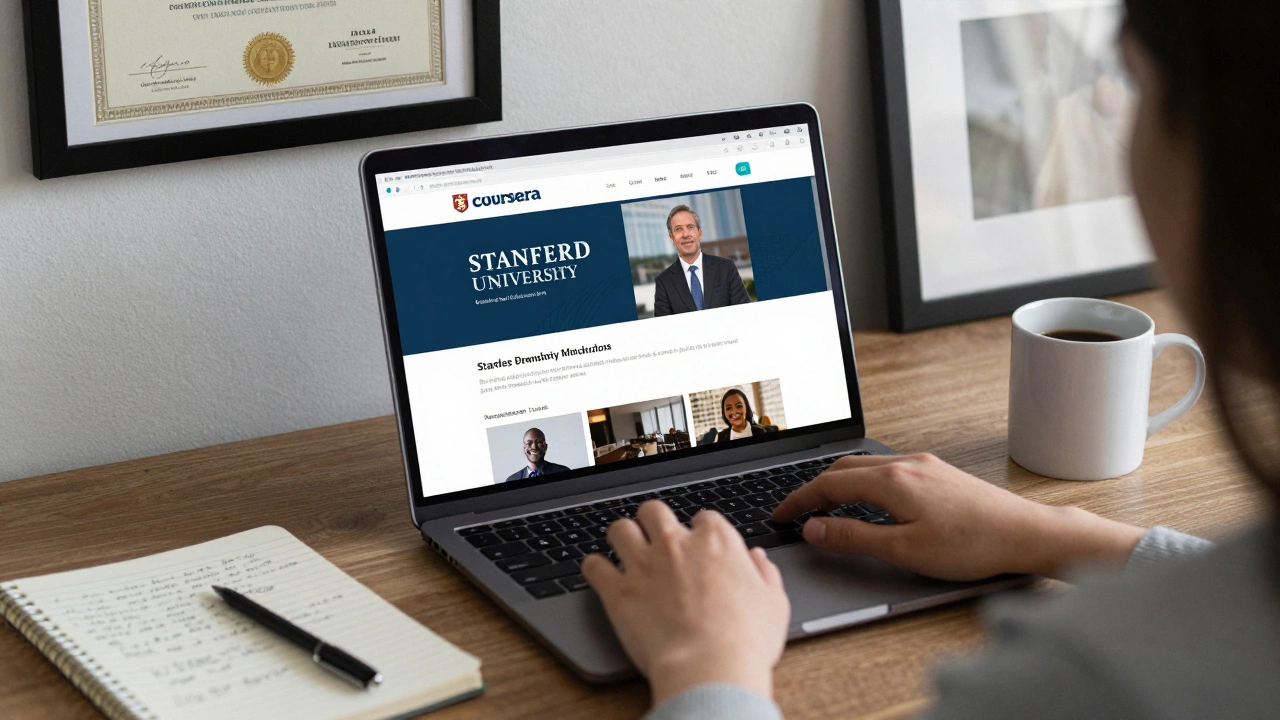
Coursera isn't just another site with videos. It partners directly with universities like Stanford, Yale, and the University of London to offer accredited courses and even full degrees. If you need a credential that employers recognize, Coursera is one of the few platforms where that matters. You can take a single course on data analysis for $49, or go all the way to a Master’s in Business Administration for under $20,000-far less than on-campus tuition.
The platform’s strength is structure. Courses are broken into weekly modules with quizzes, peer-reviewed assignments, and final projects. Many include industry-relevant tools like Python, Tableau, or SQL. Over 130 million learners have used Coursera since 2012, and 80% of users say they got a promotion, raise, or new job because of it. It’s not flashy, but it works.
Best for: Professionals needing verified credentials, career changers, people aiming for university-level learning without leaving their job.
Udemy: The Marketplace for Every Skill
Udemy is the Amazon of online learning. Anyone can create a course-whether they’re a former Google engineer or a TikTok influencer who learned Photoshop in two weeks. That means you get over 215,000 courses on everything from blockchain to baking sourdough bread.
The downside? Quality varies wildly. Some courses are outdated or poorly recorded. But the upside? You can often buy a course for under $15 during sales. And if you’re learning for fun or to pick up a quick skill-like how to use Canva or edit videos in Premiere Pro-Udemy is hard to beat.
Top-rated courses include “The Complete Web Developer Bootcamp” (over 700,000 students) and “Excel for Business” (nearly 500,000 students). Most courses come with lifetime access, downloadable resources, and a certificate of completion. No accreditation, but plenty of practical value.
Best for: Hobbyists, freelancers, people who want to learn something specific without a long commitment.
edX: The Nonprofit Alternative
Founded by Harvard and MIT, edX was built to make elite education free and open. While it now charges for certificates, the core content remains free to audit. That’s rare. You can take “Introduction to Computer Science” from Harvard for free, watch all the lectures, do the problem sets, and still learn as much as a student on campus.
What sets edX apart is its academic rigor. Courses are designed by professors, not instructors hired for their marketing skills. You’ll find advanced topics like quantum computing, climate science, and ethics in AI-all taught at a university level. Many courses also offer MicroMasters programs, which can count toward a full master’s degree if you later enroll at a partner university.
edX also partners with companies like IBM and Microsoft to offer professional certificates. If you’re looking to upskill in a technical field without spending thousands, this is one of the cleanest, most trustworthy options out there.
Best for: Learners who value academic depth, people on a tight budget, those aiming for technical or scientific fields.
Khan Academy: The Free Foundation Builder
Khan Academy doesn’t sell certificates. It doesn’t charge anything. And yet, it’s used by over 150 million people worldwide. Why? Because it teaches the fundamentals-really well.
From basic math for 5th graders to calculus, physics, economics, and even SAT prep, Khan Academy breaks down complex ideas into short, digestible videos. Each lesson is under 10 minutes, followed by practice exercises that adapt to your progress. No fluff. No upsells. Just clear explanations.
It’s the go-to platform for students who need to fill gaps in their knowledge. A high schooler struggling with algebra? Khan Academy. A 30-year-old returning to school after years away? Khan Academy. Even college students use it to review concepts before exams. It’s not for advanced professionals seeking certifications-but it’s the most effective free tool for building real understanding.
Best for: Students, self-learners, anyone needing to master the basics before moving on.
How to Choose the Right One for You
Here’s a quick way to decide which platform fits your goal:
- Need a certificate for your resume? Go with Coursera or edX.
- Want to learn a specific tool or skill fast? Udemy is your best bet.
- Prefer free, university-level content? Stick with edX or Khan Academy.
- Struggling with math, science, or basics? Start with Khan Academy.
Some people use more than one. For example, you might start with Khan Academy to understand calculus, then take a Coursera course on data science that uses it. Or use Udemy to learn Photoshop, then join a Coursera design program to build a portfolio.
What These Platforms Don’t Tell You
Most platforms make it look easy. But learning online is harder than it seems. Here’s what actually works:
- Finish what you start. Over 90% of people who sign up for a course never finish it. Set a weekly goal-even 30 minutes a week helps.
- Take notes by hand. Studies show writing things down improves retention more than typing.
- Apply what you learn. Don’t just watch. Build something. Code a small app. Write a blog. Make a spreadsheet. Action cements learning.
- Join the community. Coursera and edX have discussion boards. Use them. Ask questions. Help others. That’s where real learning happens.
Platforms give you the tools. You give you the effort. The best platform won’t help if you don’t show up.
Final Thoughts
There’s no single “best” online learning platform. The right one depends on what you want to achieve. If you’re aiming for a promotion, Coursera’s credibility wins. If you’re learning for fun, Udemy’s variety wins. If you’re on a budget, edX and Khan Academy give you elite content for free.
The real question isn’t which platform to pick-it’s what you’re willing to do once you’ve signed up. The tools are there. The knowledge is free or cheap. Now it’s up to you to use it.
Are online learning platforms worth it?
Yes-if you use them the right way. Platforms like Coursera and edX have helped millions get jobs, promotions, or degrees. But simply signing up won’t do anything. You need to complete assignments, practice regularly, and apply what you learn. People who treat online courses like real classes see results. Those who treat them like TV shows rarely do.
Can I get a degree from an online learning platform?
Yes. Coursera and edX both offer full online degrees from accredited universities, including master’s programs in business, computer science, and public health. These degrees cost a fraction of traditional universities and are recognized by employers. You’ll still need to meet admission requirements, but once enrolled, you complete the same coursework as on-campus students.
Do I need to pay for certificates?
Not always. Khan Academy and edX let you audit courses for free, including all videos and exercises. But if you want a certificate to show employers, you’ll need to pay-usually between $50 and $100. Udemy and Coursera charge for certificates too, but they often run sales. Wait for a discount. You can often get a certificate for under $15.
Which platform is best for learning programming?
For beginners, start with Khan Academy’s computer science section to understand logic and basics. Then move to Coursera’s “Python for Everybody” or edX’s “CS50’s Introduction to Computer Science.” For hands-on coding practice, Udemy has affordable, project-based courses like “The Complete JavaScript Course.” Combine them: theory from Coursera/edX, practice from Udemy.
Are these platforms good for non-English speakers?
Most platforms offer subtitles in multiple languages. Coursera and edX have courses with dubbed audio in Spanish, French, Portuguese, and Mandarin. Khan Academy has content translated into over 40 languages. Udemy courses vary-check the course page for subtitle availability before buying. Language learners often use these platforms to improve both their subject knowledge and their English at the same time.
Next Steps
Start small. Pick one platform and one course that matches your goal. If you’re unsure, try Khan Academy for a week-no cost, no pressure. If you want to build a career, pick one Coursera course with a certificate. Block out 30 minutes a day. Stick with it for 30 days. That’s all it takes to see real progress.
Don’t wait for the perfect platform. The best one is the one you actually use.