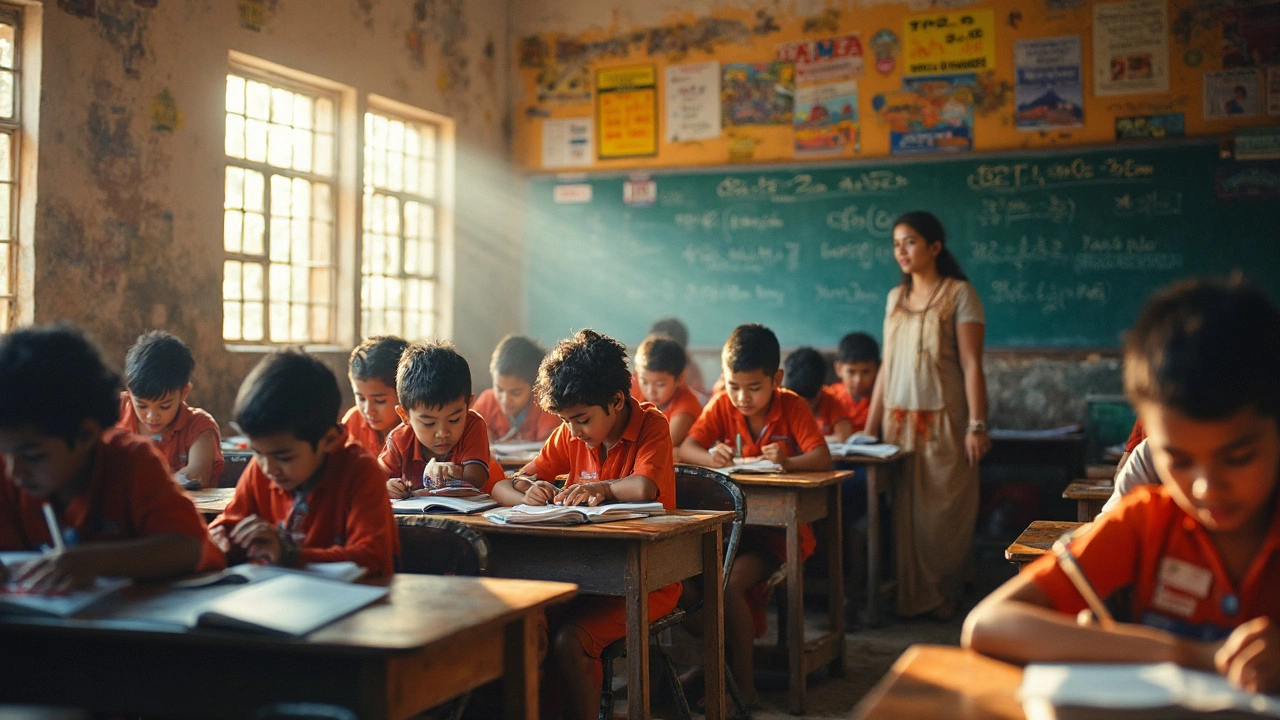
Is CBSE really as tough as people claim? This article digs into how the CBSE syllabus measures up against other hard-hitting school programs worldwide. You’ll find real comparisons, honest facts about study pressure, and what students actually go through. Discover why some call it tough, but also why it works for many. Don’t just look at textbook weight—see what sets CBSE apart.
World School Syllabi: What They Are and How They Shape Global Education
When we talk about world school syllabi, standardized educational frameworks used by schools across countries to define what students learn and how they’re assessed. Also known as international curricula, these systems are designed to prepare students for global universities and careers—not just local exams. They’re not just lists of topics. They’re blueprints for how kids think, solve problems, and communicate across cultures.
There are a few big names you’ll hear over and over: the International Baccalaureate (IB), a rigorous, inquiry-based program used in over 5,000 schools worldwide, focusing on critical thinking and global awareness; the Cambridge Assessment International Education, a UK-based system known for its structured exams and deep subject mastery, popular in Commonwealth countries; and CBSE, India’s national board that blends standardized testing with practical learning, widely followed in Indian schools including those abroad. These aren’t interchangeable. IB pushes projects and reflection. Cambridge demands precision. CBSE rewards consistency and memorization. Your choice shapes your child’s learning rhythm—and future options.
What’s missing from most conversations? How these syllabi affect real students. A kid in Dubai following IB might spend months on a research project about climate change. One in Delhi studying CBSE might memorize 200 chemical reactions for a single exam. Both are valid. Both are intense. But they build different skills. The IB student learns how to ask questions. The CBSE student learns how to deliver under pressure. The Cambridge student learns how to structure answers perfectly. None of these are "better." They’re just different tools for different goals. And if you’re choosing a school—or planning to switch—you need to know what each one actually asks of the student, not just what the brochure says.
That’s why the posts below matter. You’ll find real comparisons between learning models, insights into what actually gets taught in top international schools, and practical advice on how to prepare for exams under these systems. Whether you’re a parent weighing options, a student switching boards, or just curious about how education works across borders, these articles cut through the noise. No fluff. Just what you need to understand what’s really happening in classrooms around the world—and how to make the right move for your path.