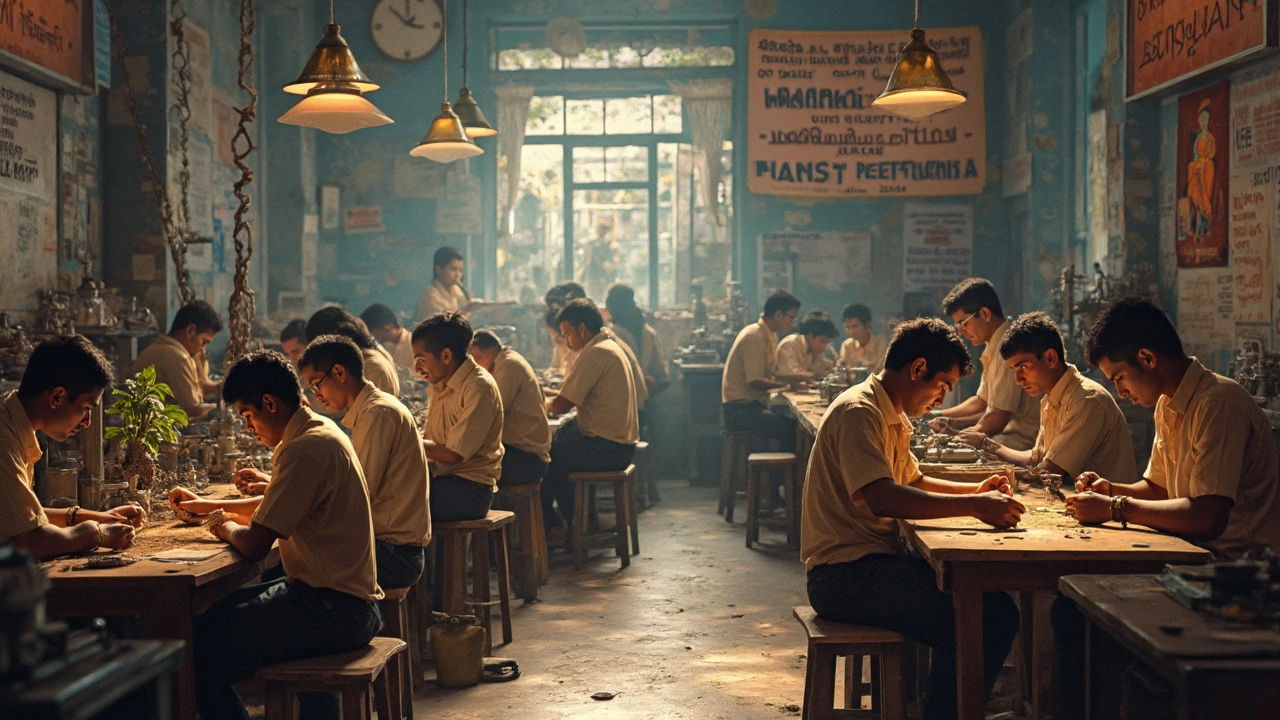
Vocational schools offer specialized training for specific trades or careers. Often dubbed as trade schools or technical schools, they provide hands-on experience and focus on practical skills acquisition. This makes them an attractive alternative to traditional academic paths, catering to students aiming for immediate employment. Explore the fascinating world of vocational education and discover various names these institutions go by.
Vocational School: What It Is and Why It Matters for Career Success
When you think of vocational school, a type of educational institution focused on teaching practical skills for specific trades and jobs. Also known as technical school or career college, it prepares students for hands-on work in fields like plumbing, nursing, electrical work, automotive repair, and IT support—not theory-heavy classrooms. Unlike traditional degrees that take years, vocational training often finishes in months or two years, and you walk out with a certificate, license, or skill that employers actually want.
These schools don’t just teach you how to fix a circuit or change a tire—they teach you how to show up on time, follow safety rules, work in teams, and solve real problems under pressure. That’s why employers in Kerala and across India are hiring more vocational graduates than ever. In fact, many government jobs under the Kerala PSC now list technical certifications as preferred or even required qualifications. You don’t need a BA to land a good job—you need proven skills. And vocational schools are built exactly for that.
Related concepts like career training, structured programs designed to equip individuals with job-specific competencies for immediate employment and technical education, instruction focused on applied sciences and mechanical or industrial skills are at the heart of what makes these schools work. They’re not second choices—they’re strategic choices. Think about it: who gets hired faster after training? Someone who’s spent three years memorizing history or someone who’s spent six months learning to operate CNC machines and has a portfolio of actual projects?
What’s missing in most discussions about education is this: not everyone thrives in lecture halls. Some people learn by doing. Some want to earn while they learn. Some need to support families and can’t afford five years of college debt. That’s where vocational schools shine. They’re affordable, fast, and focused. And in a country like India, where job creation in manufacturing, healthcare, and infrastructure is booming, these schools are the quiet engine behind skilled labor.
You’ll find posts here that dig into what actually works in career training—like how to pick the right course, which certifications matter most for Kerala PSC exams, and why some people switch from office jobs to trades and never look back. There’s no fluff. Just facts about what’s real, what’s in demand, and what actually leads to a paycheck.
Whether you’re 18 and deciding your next step, or 35 and thinking about a career change, vocational school isn’t a backup plan—it’s the smartest path forward. The posts below will show you how to navigate it, avoid the traps, and turn your training into a lasting career.