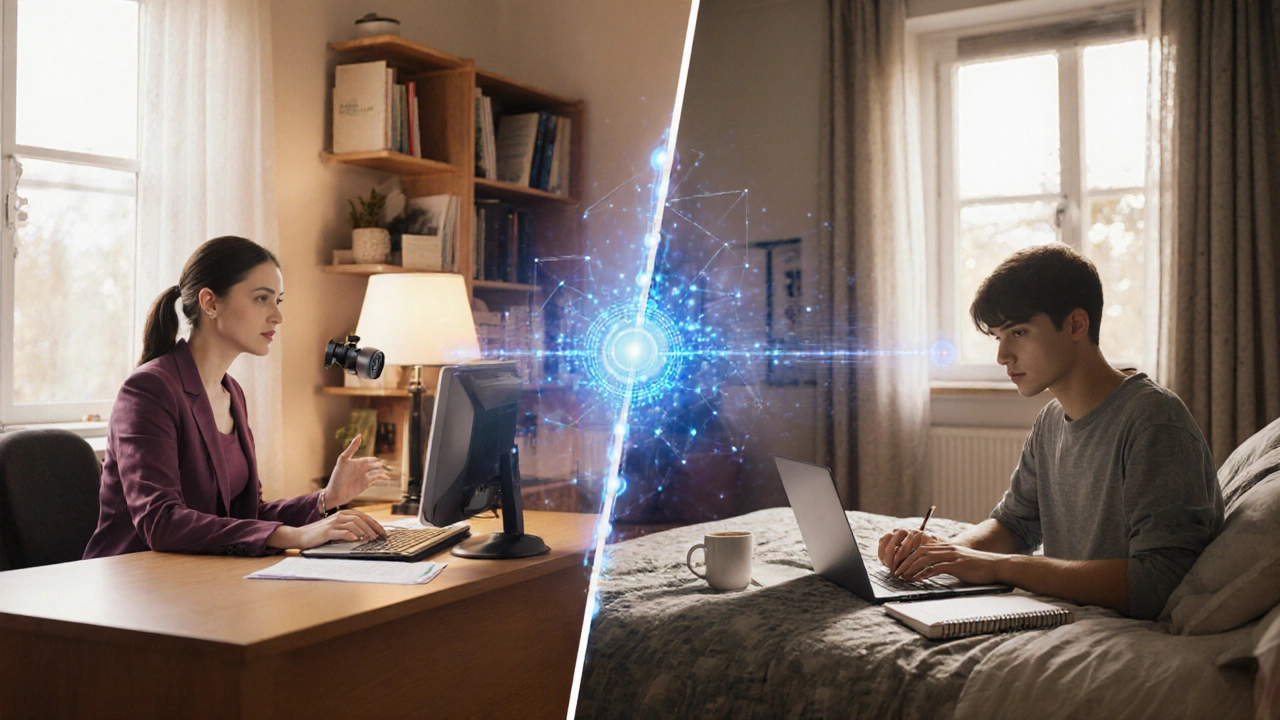
Explore how distance learning operates, from technology and LMS basics to synchronous vs. asynchronous formats, assessments, challenges, and future trends.
Virtual Classroom: What It Is and How It Works in 2025
When you think of a virtual classroom, a digital space where teachers and students interact in real time over the internet. Also known as online learning environment, it’s no longer just a backup plan—it’s the main stage for millions of learners, from Kerala PSC aspirants to college students and career switchers. Unlike old-school video lectures, a virtual classroom lets you raise your hand, ask questions, join group discussions, and even share your screen—all while sitting at home.
This isn’t just about watching videos. A true virtual classroom needs tools like live video, chat, breakout rooms, and shared whiteboards. It’s powered by platforms like Zoom, Google Meet, or specialized LMS systems—many of which now use xAPI or CMI5 to track how you learn, not just if you clicked ‘play’. These standards help educators see where you struggle, what you ace, and how to adjust lessons in real time. And it’s not just for kids. People in their 40s and 50s are using virtual classrooms to prep for government exams, learn coding, or brush up on English—all on their own schedule.
What makes a virtual classroom stick? It’s not the tech. It’s the connection. The best ones feel like a real classroom: someone calls your name, checks your progress, and gives feedback. That’s why so many people who tried online courses and quit are now choosing structured virtual classrooms. They want accountability. They want interaction. They want to know someone’s watching—and cares. And that’s exactly what the posts below cover: real stories from learners who switched from passive watching to active participation, from feeling lost to feeling supported.
You’ll find guides on how to pick the right platform, what to look for in a live class, and why some online courses fail while others transform your career. Whether you’re studying for Kerala PSC, learning to code, or trying to speak English without fear, the right virtual classroom can make all the difference. No fluff. No promises. Just what actually works in 2025.
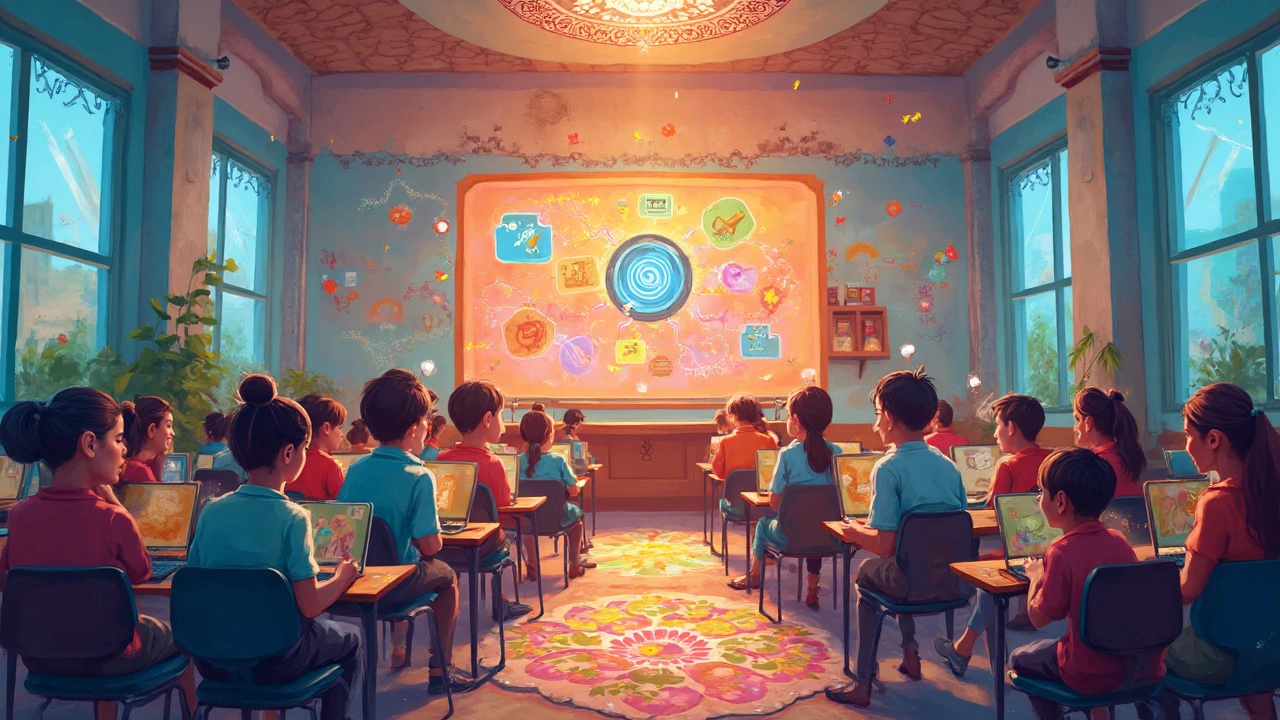
eLearning platforms have revolutionized how we acquire knowledge by offering flexible, scalable, and often interactive educational experiences. Whether you're pursuing a new skill, enhancing professional credentials, or just nurturing curiosity, these platforms accommodate diverse needs by providing access to a plethora of online courses. Understanding how these platforms function and their benefits can help you make informed decisions about your learning journey. This article delves into real-life eLearning examples, showcases features that make them effective, and offers tips to maximize your online learning experience.

eLearning requires a strategic combination of technology, engaging content, and user-centric design to foster an effective learning experience. By incorporating interactive elements and accessible resources, educators can create dynamic digital classrooms that cater to diverse learning styles. Evaluating and selecting the right platform, along with continuous feedback, ensures adaptability and continuous improvement in providing quality education. Security and privacy concerns must also be addressed to protect both educators and learners.