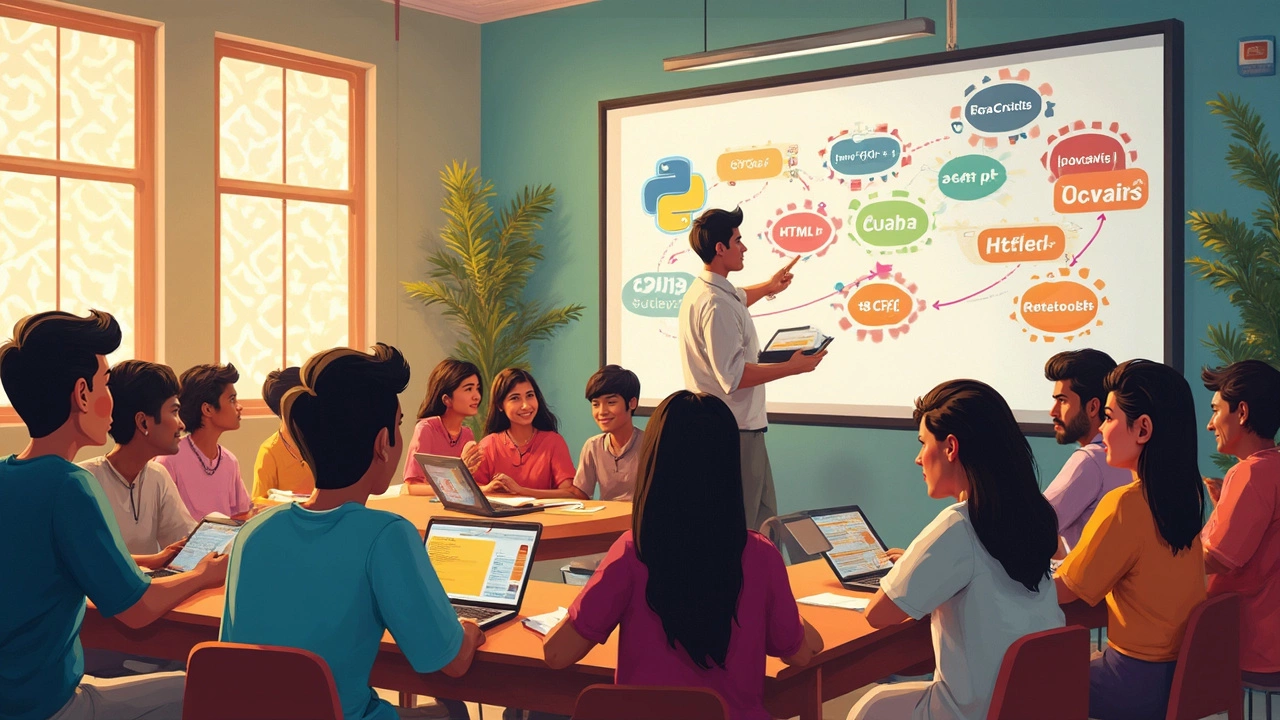
Wondering which coding language to tackle first? This article breaks down the top choices, matches them to real-world uses, and busts myths about what 'beginner-friendly' really means. Whether you're eyeing web development, game design, or just want to automate your daily tasks, you'll get clear, honest advice to make your first step into coding less confusing. Find out what pros wish they’d known when they started and get practical tips to help you decide exactly where to start. No experience needed—just some curiosity.
JavaScript: What It Is, Why It Matters, and How It Powers Modern Tech
When you click a button, watch a video auto-play, or see a form update without reloading, you’re seeing JavaScript, a programming language that brings websites to life. Also known as JS, it’s not just another tool—it’s the reason most websites feel responsive, not static. Unlike HTML, which builds structure, or CSS, which styles it, JavaScript makes things happen. It runs in your browser, on servers, even on smart devices. You don’t need to be a developer to use it—you just need to understand that it’s everywhere.
JavaScript powers the tools and platforms you interact with daily. It’s behind the live search bars on Amazon, the real-time chat on Slack, the animated maps on Google Maps, and the dynamic feeds on Facebook. It’s also the foundation of modern frameworks like React and Node.js, which let companies build fast, scalable apps. And yes—it’s one of the top skills employers look for. If you’re learning to code, JavaScript is often the first language you’ll touch because it’s beginner-friendly and instantly rewarding. You write a line, you see a result. No waiting. No complex setup. Just immediate feedback.
It’s not just about websites. JavaScript runs on phones through apps built with React Native, on desktops with Electron, and even on smart fridges and wearables. Companies hire JavaScript developers not because they know syntax, but because they solve real problems—making interfaces smoother, reducing load times, fixing bugs that cost money. The posts below cover what matters: how JavaScript fits into the bigger picture of coding careers, salary trends, and learning paths. You’ll find real talks about what it takes to learn it, why it pays well, and how it connects to other tech like e-learning platforms and remote work tools. Whether you’re starting from zero or upgrading your skills, this collection gives you the straight facts—not hype.