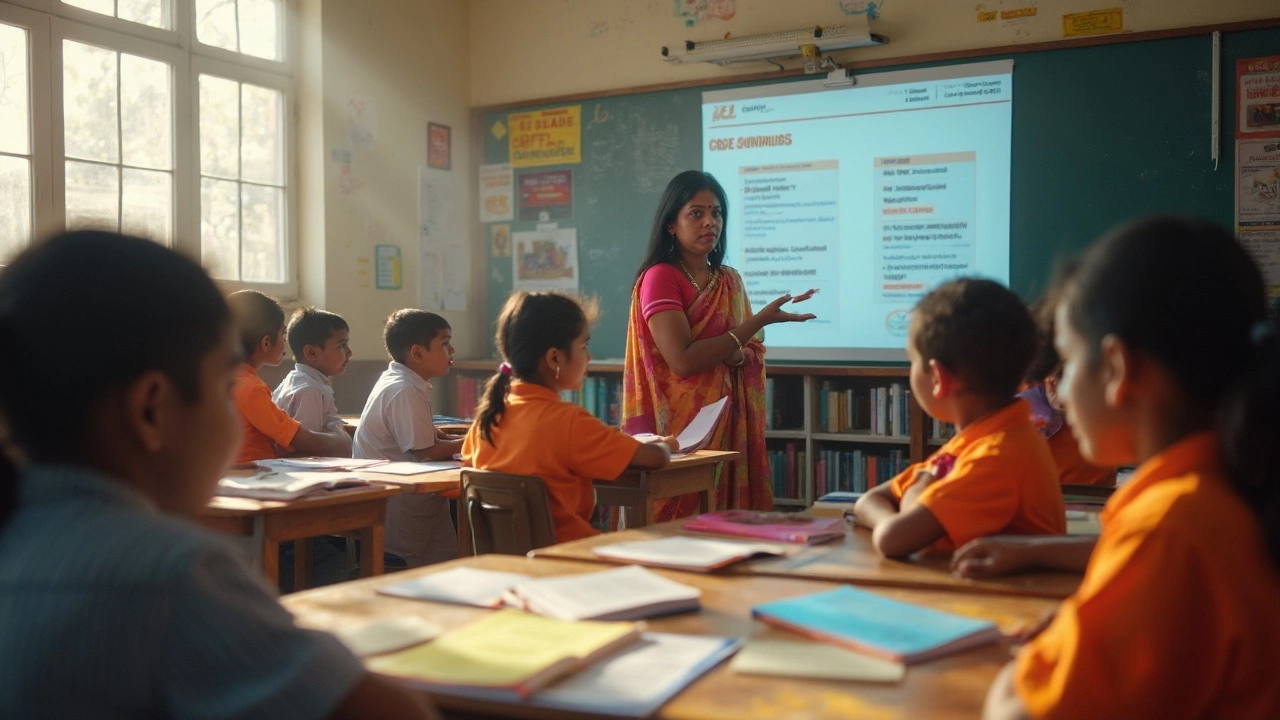
Curious about what your kids are actually studying in Indian schools under CBSE? This article breaks down the CBSE syllabus—the structure, subjects, key changes, and tips for parents and students. Get practical advice on using the syllabus to stay ahead and ease the exam worry. Find out how the CBSE approach shapes everyday learning and links to your child's future college plans. Read on for a no-nonsense guide to the CBSE roadmap.
India schools: Understanding CBSE, curriculum, and how they shape student success
When we talk about India schools, the network of educational institutions across India that follow state, central, or international curricula. Also known as Indian educational institutions, they form the backbone of how millions of students prepare for careers, competitive exams, and life beyond the classroom. Not all India schools are the same. Some follow the CBSE curriculum, the national board system run by the Central Board of Secondary Education, used by over 20,000 schools across India and abroad. Also known as Central Board of Secondary Education, it’s the most common board for students aiming for engineering, medical, or government jobs. Others follow state boards, ICSE, or even IB programs. But if you’re preparing for exams like NEET, JEE, or Kerala PSC, chances are your education path started in a CBSE school.
What makes CBSE schools stand out? Their focus on standardized testing. The board exams at Class 10 and Class 12 aren’t just final tests—they’re gateways. A good score here opens doors to top coaching centers, engineering colleges, and even federal jobs later on. Unlike some state boards that test local content, CBSE designs its syllabus with national exams in mind. That’s why so many students from small towns end up in IITs or AIIMS—they studied under CBSE, where the material lines up directly with what’s asked in JEE or NEET. And it’s not just about rote learning. CBSE has slowly shifted toward application-based questions, especially after 2020, making problem-solving skills more important than memorizing facts.
But India schools aren’t just about boards and textbooks. They’re shaped by infrastructure, teacher quality, and access to resources. A school in Kochi might have smart classrooms and online labs, while one in a remote village still uses chalkboards and shared textbooks. Yet, both follow the same CBSE syllabus. That gap in resources is one reason why coaching institutes have exploded in India—students need extra help to compete on an uneven playing field. That’s also why so many posts here focus on study materials, free learning tools, and how to make the most of limited resources. Whether you’re a parent choosing a school, a student struggling with board prep, or someone preparing for government exams after graduation, understanding how India schools work gives you the edge.
Below, you’ll find real guides on how CBSE schools operate, what their exams really test, and how to turn school learning into exam success. No fluff. Just what works.