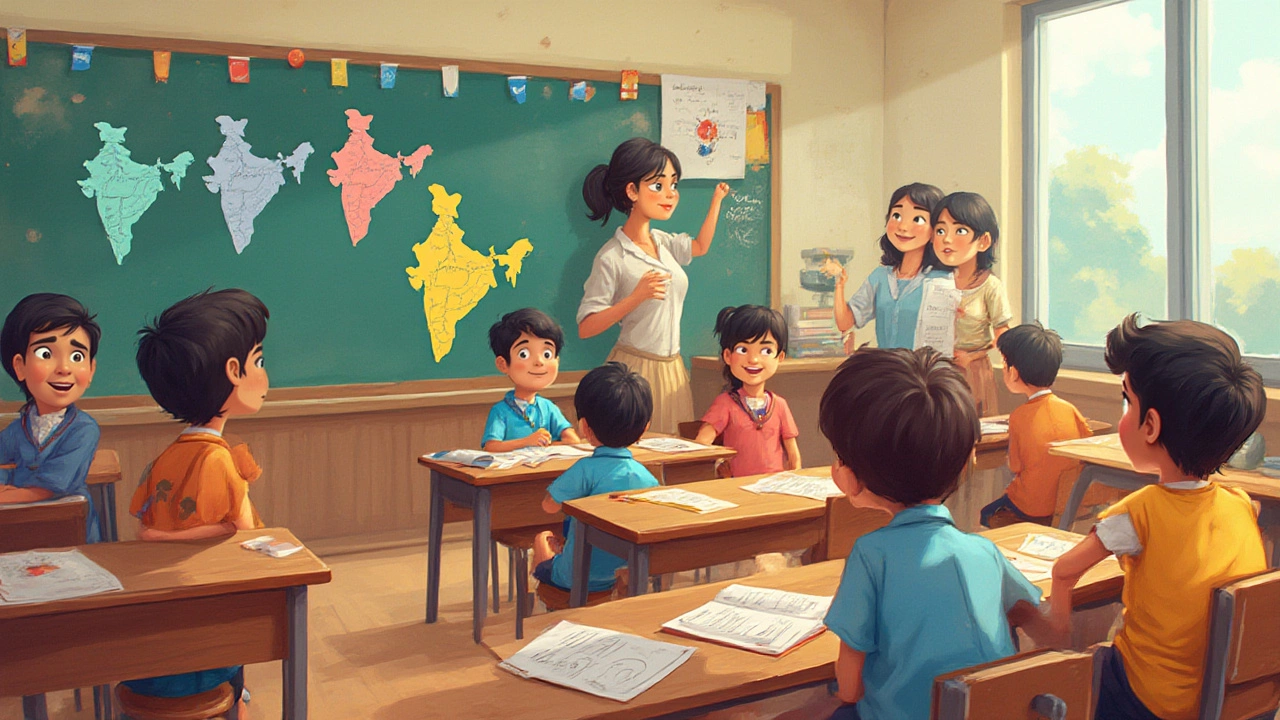
Curious if CBSE is just a Delhi board? Learn how this national board really works, its roots, and why students everywhere know about CBSE.
Education System in India: How It Works and What Really Matters
When you talk about the education system, the structured framework of schools, boards, exams, and training that guides learning in India. Also known as the Indian education system, it’s not just about classrooms—it’s a high-stakes pipeline that leads to competitive exams, government jobs, and careers in tech, law, and medicine. This system isn’t broken, but it’s not fair either. It rewards memory over understanding, exam scores over skills, and conformity over creativity. And yet, millions still navigate it because it’s the only path that opens doors to stable jobs and social mobility.
At the core of this system are CBSE schools, the national board that sets curriculum standards for over 20,000 schools across India and abroad. These schools follow a uniform syllabus, run standardized board exams, and push students toward engineering and medical streams from grade 9. But CBSE isn’t the only player. State boards, ICSE, and IB schools offer different pacing and focus, yet none escape the shadow of the competitive exams, high-pressure tests like NEET, JEE, UPSC, and Kerala PSC that decide who gets into top colleges, government posts, or public sector jobs. These exams aren’t just tough—they’re gatekeepers. One score can change your life, and that pressure shapes how students learn, how parents spend, and how teachers teach.
Meanwhile, the old classroom model is cracking. More people are asking: Do you really need to sit in a physical school to succeed? The rise of distance learning, online education that lets you study from home with flexible schedules and digital resources is changing the game. You can now learn coding for free, prep for NEET with YouTube videos, or train your brain to speak English without paying for coaching centers. The system hasn’t caught up yet, but the tools are here. And that’s why the real question isn’t which board is better—it’s whether your learning style fits the system, or if the system needs to fit you.
What you’ll find below isn’t just a list of articles. It’s a map. A map of how people actually survive and win inside this system—whether they’re switching careers after 40, trying to join the military with a felony record, learning to code at 38, or choosing between online and in-person classes in 2025. These aren’t theory pieces. They’re real stories from people who’ve been through it. And if you’re trying to make sense of your next step in Indian education, this is where you start.