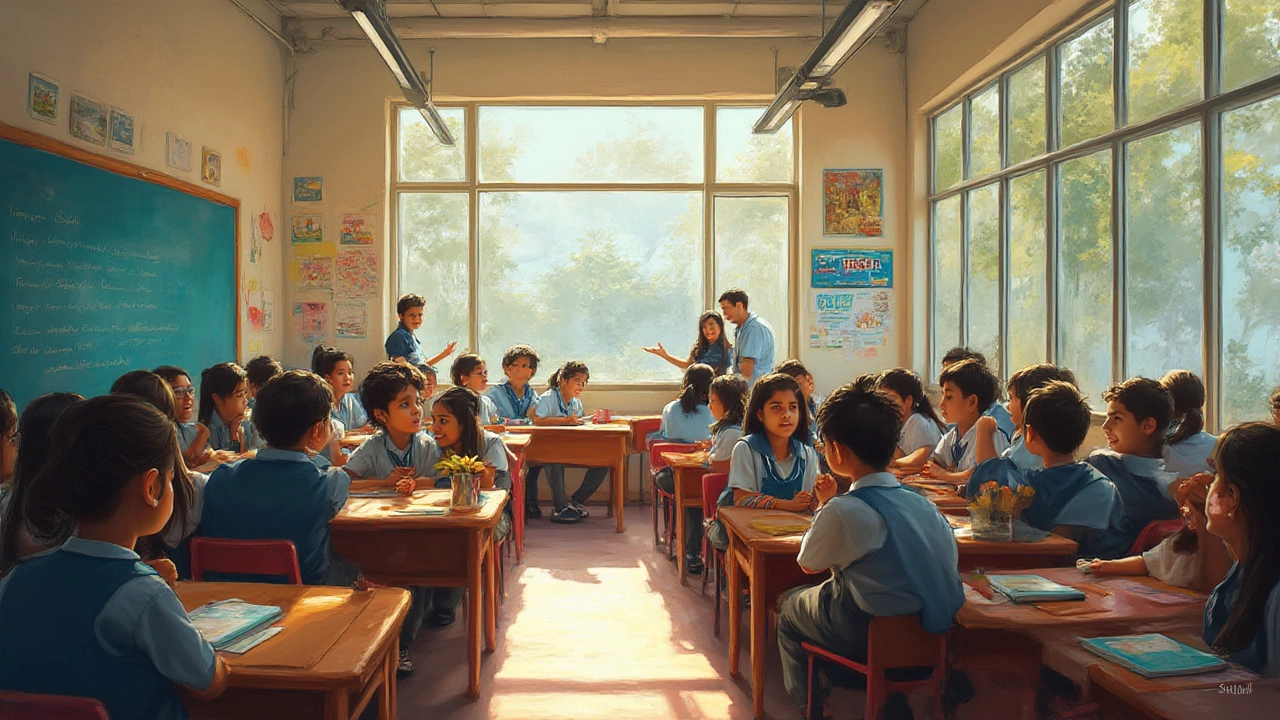
Wondering if Delhi Public School follows ICSE or CBSE? Get a detailed look into DPS curriculum, teaching style, and what it really means for students and parents.
Delhi Public School: What You Need to Know About India’s Leading School Network
When you hear Delhi Public School, a major private school network in India affiliated with the Central Board of Secondary Education (CBSE). Also known as DPS, it operates over 100 campuses across India and abroad, serving millions of students since its founding in 1949. It’s not just a single school—it’s a system built on structure, discipline, and a focus on academic results. Many parents choose DPS not because it’s the cheapest, but because it’s one of the most predictable paths to top board exam scores and college admissions.
What makes DPS different? It’s the combination of standardized curriculum, strong teacher training, and heavy emphasis on exams. Unlike some schools that focus on creativity or project-based learning, DPS leans into what works: clear syllabi, regular testing, and a culture that rewards performance. You’ll find DPS schools in cities like Bangalore, Hyderabad, Lucknow, and even abroad in Dubai and Kuwait—each following the same CBSE framework but adapting slightly to local needs. The school network also ties into larger educational trends you’ll see in other posts here, like the rise of CBSE schools in India and how coaching culture shapes student life.
Many families see DPS as a stepping stone—not just for school, but for competitive exams later on. Students from DPS often go on to prepare for JEE, NEET, or civil services, and the school’s structure prepares them for that pressure early. You’ll notice in our collection that topics like CBSE schools, India’s most widespread school board system, known for standardized exams and national curriculum and private schools in India, fee-based institutions that often outperform government schools in exam results and infrastructure come up again and again. That’s no accident. DPS sits right at the center of that conversation.
But it’s not perfect. Critics say DPS creates high-pressure environments, with students burning out from constant testing. Others argue it’s too rigid, leaving little room for arts, sports, or independent thinking. Still, for families who want a clear roadmap to top colleges, DPS remains one of the most trusted names in Indian education. Whether you’re a parent weighing options, a student preparing for board exams, or someone researching how school systems work in India, the posts below cover real experiences, comparisons, and insights about DPS and the world it’s part of.