Daily English Speaking Practice Calculator
Track Your Progress
Total Practice Time
7 days: minutes
14 days: minutes
30 days: minutes
Key Milestones
You'll catch yourself thinking in simple English
Friends might say, "You sound different." You'll understand more in movies without subtitles.
You'll be able to talk for 2-3 minutes straight without stopping.
Want to speak English better-but don’t have time for classes, commute, or expensive tutors? You’re not alone. Millions of people around the world are stuck in the same spot: they understand English, they can write it, but when it comes to speaking, their mind goes blank. The good news? You don’t need a classroom to get fluent. You just need the right habits, daily practice, and a few proven tricks that work even in your living room.
Start Talking to Yourself-Yes, Really
The biggest mistake people make is waiting until they feel "ready" to speak. There’s no such thing as ready. You become fluent by speaking, not by studying grammar rules. Start talking to yourself out loud. Describe what you’re doing. "I’m making coffee. The water’s boiling. I need to add sugar." Say it in English, even if it’s simple. Do this for 10 minutes every morning. It builds muscle memory for your mouth and brain to work together.Try this: pick one room in your house and name everything you see in English. Chair. Lamp. Mug. Window. Then describe actions: "I’m opening the door. I’m walking to the kitchen." Do this for five days straight. By day six, you’ll notice your brain starts thinking in English without you trying.
Shadowing: The Secret Weapon of Fluent Speakers
Shadowing means repeating exactly what you hear-right after you hear it. It’s not listening. It’s mimicking. Find short audio clips (under 60 seconds) from YouTube channels like BBC Learning English or English Addict with Mr Steve. Play one sentence. Pause. Say it out loud, matching the rhythm, stress, and intonation. Don’t worry about understanding every word at first. Focus on sounding like the speaker.Do this for 15 minutes a day. After two weeks, your pronunciation improves noticeably. Why? Because you’re training your tongue and lips to move in ways they never did before. Native speakers don’t speak in textbook sentences. They use contractions, drop sounds, and rush words. Shadowing teaches you how English actually sounds-not how it’s written in a book.
Use Apps That Force You to Speak
Not all language apps are equal. Some just quiz you on vocabulary. You need ones that require you to talk. ELSA Speak uses AI to listen to your pronunciation and gives instant feedback on specific sounds like "th" or "r." It tells you exactly where you’re off. Speechling lets you record yourself, then sends your audio to a real human coach who gives personalized corrections. Both cost less than $10 a month.Use them for 10 minutes a day, five days a week. Don’t skip days. Consistency beats intensity. One minute of speaking every day for a month gives you 30 minutes of real practice. That’s more than most people get in a full semester of school.

Watch Shows Without Subtitles-Then With Them
Pick a show you already like. Sitcoms work best because the dialogue is natural and repeated. Start with subtitles in English. Watch one episode. Then, rewatch it without subtitles. Don’t pause. Just try to catch what you can. Next time, pause after every line and repeat it out loud. After three episodes, you’ll start recognizing common phrases: "What’s up?", "I’m good", "Let me know if you need anything."Don’t watch for entertainment alone. Watch to steal phrases. Write down three new expressions you hear. Use them in your next conversation-with yourself, a friend, or even a voice assistant. "Hey Siri, what’s the weather like today?" becomes "Hey Siri, is it gonna rain?" Small changes build big confidence.
Record Yourself and Listen Critically
This is uncomfortable-but it works. Record yourself answering simple questions: "What did you do yesterday?" "What’s your favorite food?" "Why do you want to learn English?" Play it back. Don’t judge. Listen. Do you say "um" every three seconds? Do you pause before every verb? Do you pronounce "th" as "s" or "d"?Compare your recording to a native speaker saying the same thing. Notice the gaps. Notice the rhythm. Notice how they don’t speak word by word-they link sounds. "I want to" becomes "I wanna." "Do you want" becomes "d’ya want." That’s not laziness. That’s how English flows. Your goal isn’t to sound perfect. It’s to sound natural.
Find a Speaking Partner-Even Online
You don’t need to fly to London. Use HelloTalk or Tandem. These apps connect you with native English speakers who want to learn your language. You talk for 15 minutes in English. They talk for 15 minutes in your language. No cost. No pressure. Just real conversation.Ask questions. "How do you say this in English?" "Why do you use that word here?" Don’t be afraid to make mistakes. Most native speakers will help you. They’ve been learning your language too. They remember what it felt like.

Build a Routine-Not a Checklist
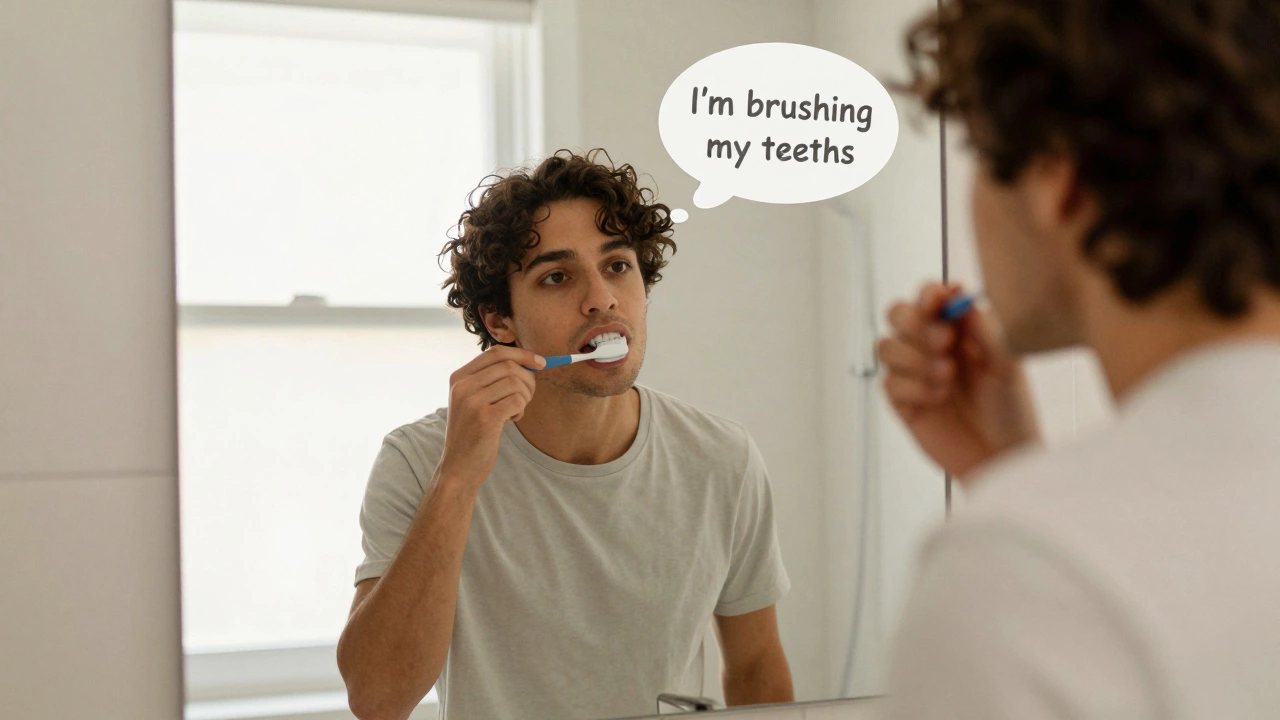
You won’t improve by doing ten things once a week. You improve by doing three things every day. Here’s a simple daily plan:- 5 minutes: Talk to yourself while brushing your teeth.
- 10 minutes: Shadow a short audio clip.
- 10 minutes: Use ELSA Speak or Speechling.
- 5 minutes: Say one new phrase you learned out loud.
That’s 30 minutes. Less than a TV episode. Do this for 30 days. You’ll notice your mouth moves differently. You’ll catch yourself thinking in English. You’ll stop translating word-for-word. That’s when fluency kicks in.
What Stops People From Getting Better
Most people quit because they think they need to be perfect. They’re afraid of sounding silly. But fluency isn’t about grammar. It’s about communication. If you say "I goed to store," and the other person understands you, you’ve succeeded. They’ll correct you if they care. But they won’t remember your mistake. They’ll remember how easy it was to talk to you.Another myth: you need to know 10,000 words. No. You need to know 300 words well. These 300 words make up 70% of everyday conversation. Words like: get, go, want, need, like, know, think, say, do, have, make, come, see, work, time, day, good, bad, big, small, here, there, now, then. Master those. Use them in sentences. That’s enough to hold a real conversation.
When You’ll Start Seeing Results
After 7 days: You’ll catch yourself thinking in simple English. You’ll notice your pronunciation is slightly better. After 14 days: Friends or family might say, "You sound different." You’ll understand more in movies without subtitles. After 30 days: You’ll be able to talk for 2-3 minutes straight without stopping. You’ll feel less anxious when speaking. You’ll start enjoying it.Fluency doesn’t come from a course. It comes from doing. Every time you open your mouth and speak, even if you’re alone, you’re building a new version of yourself. One sentence at a time.
Can I become fluent in English speaking in 30 days?
Not fully fluent-but you can become confident and understandable. Fluency takes months or years. But in 30 days, you can go from freezing up when speaking to holding short, natural conversations. That’s a huge leap. Focus on being clear, not perfect.
Do I need to learn grammar to speak better?
You need to understand basic sentence structure-subject, verb, object. But you don’t need to memorize past perfect tense or subjunctive mood. Speak first. Learn grammar as you go. When you make a mistake, look it up. That’s how you remember it.
Is it better to practice alone or with someone?
Do both. Practice alone to build confidence and pronunciation. Practice with someone to learn real responses and adapt to unexpected questions. Alone trains your mouth. With others trains your brain.
What if I don’t have anyone to talk to?
Use voice assistants. Ask Siri, Alexa, or Google Assistant questions in English. "What’s the capital of Canada?" "Tell me a joke." They won’t correct you, but they’ll force you to speak. Record your answers and listen back. You’ll hear where you stumble.
How do I stop translating from my native language?
Stop trying to translate. Start thinking in images and feelings. If you want to say "I’m hungry," don’t think "Estoy hambriento." Think of an empty stomach. Feel the sensation. Then say "I’m hungry." Use simple phrases you’ve practiced. Build your English world, not your translation bridge.