School Board Selector Tool
Answer the questions below to find the most suitable school board for your child's specific needs.
Recommended Board:
Why this fit?
Match Score
0% alignment with your inputs.
Key Considerations for :
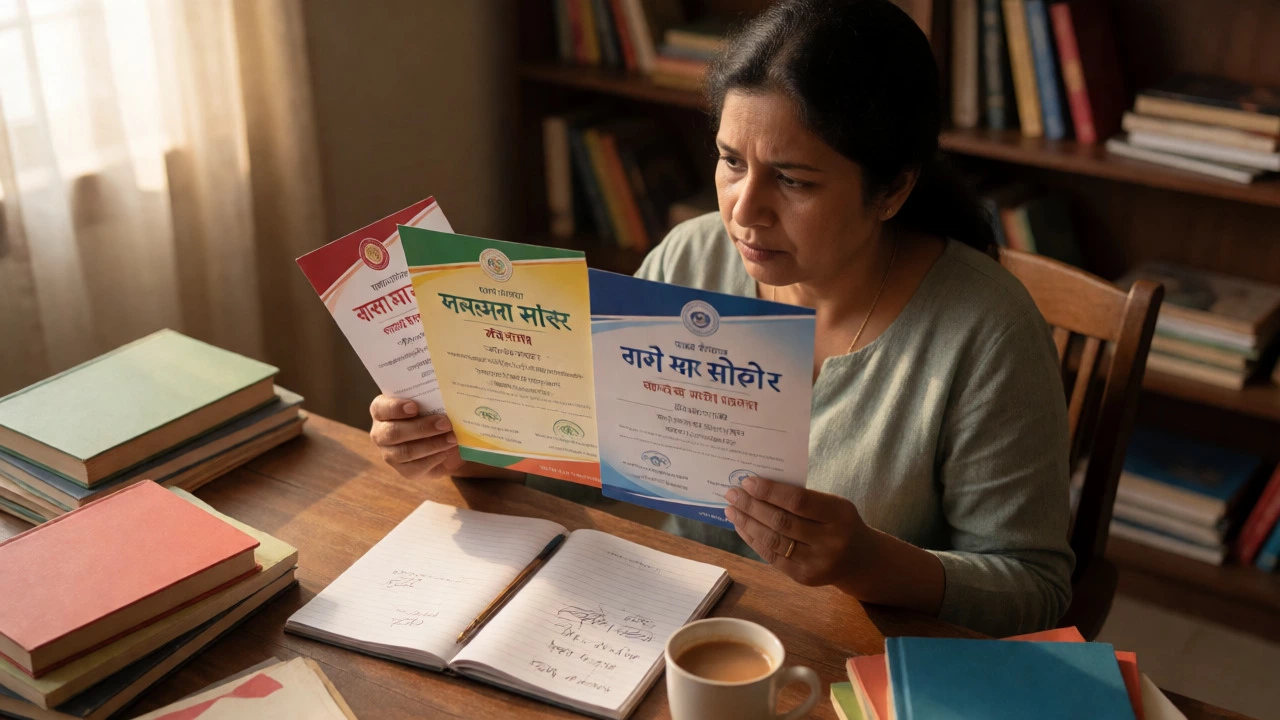
Parents often lose sleep over one specific question: which school board is actually best for my child's future? It’s not just about grades. It’s about stress levels, college admissions, and whether your kid will feel prepared for the real world or just good at memorizing textbooks. If you are in India, you’re likely staring down the barrel of a choice between CBSE, the Central Board of Secondary Education known for its standardized national curriculum, ICSE, the Indian Certificate of Secondary Education recognized for its comprehensive English and practical focus, or your local State Board. There is no single "right" answer that fits every child. The best board depends entirely on your family’s mobility, your child’s learning style, and their long-term career goals.
The Big Three: A Quick Reality Check
Before we break it down, let’s clear up the confusion. Most people think CBSE is "easy" and ICSE is "hard." That’s a myth. Both are challenging, but they challenge different muscles. CBSE tests your ability to apply concepts quickly, often with shorter answers. ICSE demands depth, lengthy essays, and strong language skills. State boards vary wildly depending on where you live-some are rigorous, others are surprisingly lenient. But here’s the kicker: colleges and employers care less about the logo on your certificate and more about what you can do with it.
Why CBSE Dominates Competitive Exams
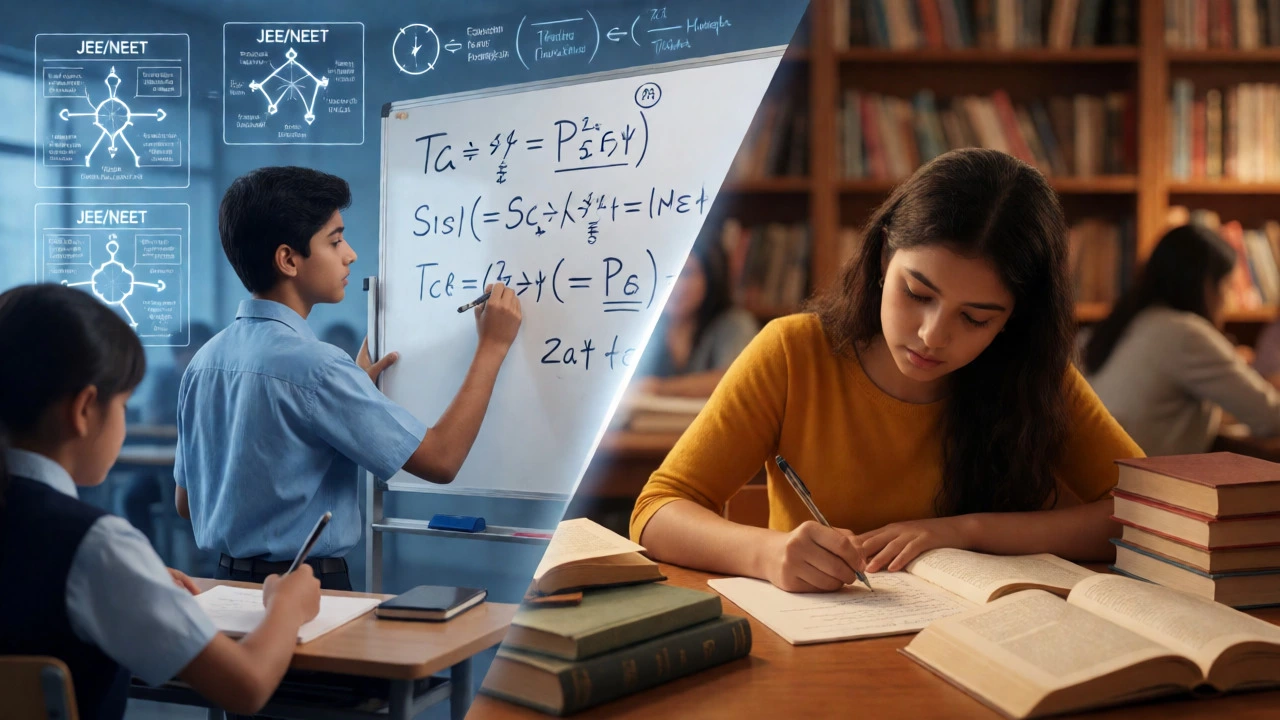
If your child aims for engineering (JEE) or medicine (NEET), CBSE is usually the strategic winner. Why? Because the syllabus aligns almost perfectly with these entrance exams. When a student studies physics in Class 11 under CBSE, they are studying exactly what JEE Main asks. There is minimal overlap waste. This alignment reduces the burden of extra coaching classes because the school work is the exam prep. Furthermore, CBSE is national. If your job requires moving from Mumbai to Delhi, your child won’t face a culture shock in the classroom. The curriculum remains consistent across thousands of schools.
However, this standardization has a downside. CBSE can sometimes feel rote-heavy if teachers aren't innovative. It prioritizes speed and accuracy. For kids who thrive on deep, slow thinking, this pace might feel suffocating. But for those who want a clear roadmap to a technical career, CBSE offers the most direct path.
ICSE: Building Strong Communication and Critical Thinking
ICSE takes a different approach. It was originally designed by Cambridge University, and that influence shows. The emphasis on English literature and language is intense. Students don’t just learn grammar; they analyze texts, write essays, and debate ideas. This builds exceptional communication skills, which are gold in fields like law, journalism, business, and humanities.
ICSE also encourages practical application. Labs and projects carry significant weight. You can’t just memorize a formula; you need to understand how to use it. This makes ICSE students highly adaptable in global universities, especially in the US and UK, where critical thinking and writing proficiency are valued over multiple-choice speed. But be warned: the workload is heavy. Balancing ICSE with intense competitive exam prep (like JEE) is tough. Many parents pull their kids out of ICSE after Class 10 to switch to CBSE for Classes 11-12 specifically for engineering prep. Is that smart? Sometimes. But it disrupts the continuity of learning.
State Boards: The Underrated Contenders
Don’t dismiss your local State Board. In states like Tamil Nadu, Maharashtra, or Kerala, the state curricula are robust and locally relevant. They often integrate regional languages and cultural context better than national boards. Plus, they are frequently more affordable. If you plan to stay in your home state for university, the state board’s familiarity with local admission criteria can be an advantage.
The risk with State Boards is inconsistency. Quality varies from district to district. A top-tier state school might outperform a mediocre CBSE school, while a rural state school might lack resources. Always visit the school. Talk to current parents. Ask about teacher retention rates. The board matters, but the school execution matters more.
How to Choose Based on Career Goals
Let’s make this concrete. Use this decision framework:
| Career Goal | Recommended Board | Why? |
|---|---|---|
| Engineering / Medicine (India) | CBSE | Syllabus matches JEE/NEET directly. Less extra study needed. |
| Law / Journalism / Humanities | ICSE | Strong English and analytical writing skills developed early. |
| Study Abroad (US/UK/Europe) | ICSE or IB | Global recognition. Focus on holistic development and essays. |
| Stay Local / Budget-Conscious | State Board | Lower fees. Familiarity with local university expectations. |
| Frequent Job Transfers | CBSE | National uniformity ensures smooth transition between cities. |

The Hidden Factor: Mental Health and Learning Style
Here is something brochures won’t tell you: a "good" board can still ruin a child’s confidence if it clashes with their personality. An anxious child might drown in the high-pressure, fast-paced environment of a top CBSE school preparing for ranks. A creative, slow-thinking child might feel stifled by rigid CBSE marking schemes but flourish in an ICSE project-based setting. Or vice versa.
Observe your child. Do they hate writing long essays? Avoid ICSE. Do they get stressed by tight deadlines? Maybe CBSE’s speed-focused exams aren’t ideal. Are they self-motivated? Then the board matters less because they will excel anywhere. Parents often choose boards based on prestige rather than fit. Stop chasing labels. Look at the actual daily life of a student in that school. Ask about homework loads. Ask about counseling support. The right board supports mental resilience, not just academic output.
What About IB and IGCSE?
You might hear about International Baccalaureate (IB) or IGCSE. These are excellent for global mobility and holistic growth. IB is incredibly demanding but produces well-rounded thinkers. However, they are expensive and may require extra effort if the child later wants to enter Indian competitive exams, as the syllabi differ significantly. Unless you have the budget and definite plans for international universities, stick to the mainstream three unless you find a specific school with a great track record.
Final Verdict: No Regrets, Just Adjustments
So, which board is best? For most Indian families targeting domestic professional courses, CBSE remains the safest, most efficient bet due to its alignment with entrance exams and national consistency. For those prioritizing communication skills, global readiness, or humanities, ICSE wins. For locals with stable roots, State Boards offer value and relevance.
Remember, the board is just the vehicle. The driver-your child-and the road conditions-their school environment-matter far more. A brilliant student in a "lesser" board will outshine a struggling student in a "premium" one. Choose based on fit, not fear. And once you choose, commit. Switching boards mid-stream causes more stress than sticking it out and adapting.
Is CBSE easier than ICSE?
Not necessarily easier, but different. CBSE questions are often more concise and concept-based, while ICSE requires detailed answers and stronger language proficiency. Students weak in English often find ICSE harder, while those who prefer quick problem-solving may find CBSE more manageable.
Can I switch from ICSE to CBSE after Class 10?
Yes, many students do this to prepare for JEE or NEET. However, you must bridge the gap in subjects like Physics and Chemistry where ICSE goes deeper into certain theoretical aspects. Extra coaching is usually required to adjust to the CBSE pattern.
Do colleges care about the school board?
Generally, no. Top colleges like DU, IITs, and BITS Pilani look at entrance scores and Class 12 marks regardless of the board. International universities recognize all major Indian boards but value strong English scores and extracurriculars, which ICSE/IB often highlight better.
Which board is best for NDA (National Defence Academy)?
CBSE is preferred for NDA aspirants because its mathematics and general science syllabus closely mirrors the NDA exam pattern. The straightforward nature of CBSE questions helps in building the speed required for the written test.
Is State Board education inferior?
No. Many state boards produce top rankers in national exams. The quality depends heavily on the specific school and teacher, not just the board label. State boards often provide better grounding in regional languages and local history.