
Find Your Teaching Path
Select the option that best describes your current situation or preference to find the ideal route for you.
I value academic depth
I want Master's level credits, a university degree award (PGCE), and a mix of theory and practice.
I prefer hands-on learning
I want to spend as much time in schools as possible with minimal university lectures.
I need a salary now
I cannot afford tuition fees or living costs without an income. I want to earn while I learn.
I am a school leaver
I do not have a previous degree yet and want to study teaching directly after high school/A-levels.
- Academic Award:
- Financial Aspect:
Standing in front of a classroom for the first time feels less like teaching and more like controlled chaos. You have your lesson plan, you know your subject, but thirty pairs of eyes are waiting to see if you actually have it together. This is where initial teacher training (ITT) steps in. It isn’t just about learning how to write on a whiteboard or manage a register. It is the rigorous bridge between knowing a subject and being able to teach it effectively.
If you are considering a career in education, understanding what ITT entails is crucial. It determines whether you get Qualified Teacher Status (QTS) in England, which is the legal requirement to teach in state schools. Without this specific training period, your knowledge of history, math, or science doesn't translate into a recognized teaching credential. Let’s break down exactly what this process involves, the different routes available, and how to navigate the system without getting lost in the bureaucracy.
The Core Purpose of Initial Teacher Training
Initial teacher training is the foundational phase of a teacher's professional development. Think of it as medical school for educators. Just as a doctor needs clinical rotations before practicing independently, a teacher needs supervised classroom experience before being trusted with a full timetable. The primary goal is to ensure that new teachers meet the Teachers’ Standards set by the Department for Education (DfE). These standards cover everything from setting high expectations to adapting teaching for pupils with special educational needs.
During ITT, you aren't just reading textbooks. You are spending significant time in schools-often at least 24 weeks out of a typical one-year program. This placement-based approach ensures that theory meets practice immediately. You learn how to differentiate lessons for mixed-ability groups, how to handle behavioral issues without escalating them, and how to assess student progress accurately. It is intense, demanding, and absolutely necessary for building confidence.
Is initial teacher training the same as a university degree?
Not necessarily. While some ITT programs lead to a Postgraduate Certificate in Education (PGCE), which is an academic award, others focus solely on gaining Qualified Teacher Status (QTS). You can gain QTS through school-direct training without earning a university degree credit. However, many employers prefer candidates who have both QTS and a PGCE because it demonstrates both practical competence and theoretical understanding.
The Main Routes to Qualification
There is no single path to becoming a teacher in the UK. The system offers several distinct routes, each catering to different backgrounds and career stages. Choosing the right route depends on your current employment status, financial situation, and whether you want to study part-time or full-time.
| Route | Duration | Academic Award | Best For |
|---|---|---|---|
| Postgraduate Certificate in Education (PGCE) | 1 year (full-time) | Yes (Master’s level credits) | Graduates wanting academic depth and future career flexibility |
| School-Centred Initial Training (SCIT) | 1 year (full-time) | No (usually) | Those who prefer hands-on learning over university lectures |
| School Direct (Salaried) | 1 year (full-time) | Varies | Working professionals who need a salary while training |
| Bachelor of Education (BEd) | 3-4 years (undergraduate) | Yes (Degree + QTS) | School leavers entering directly into teacher education |
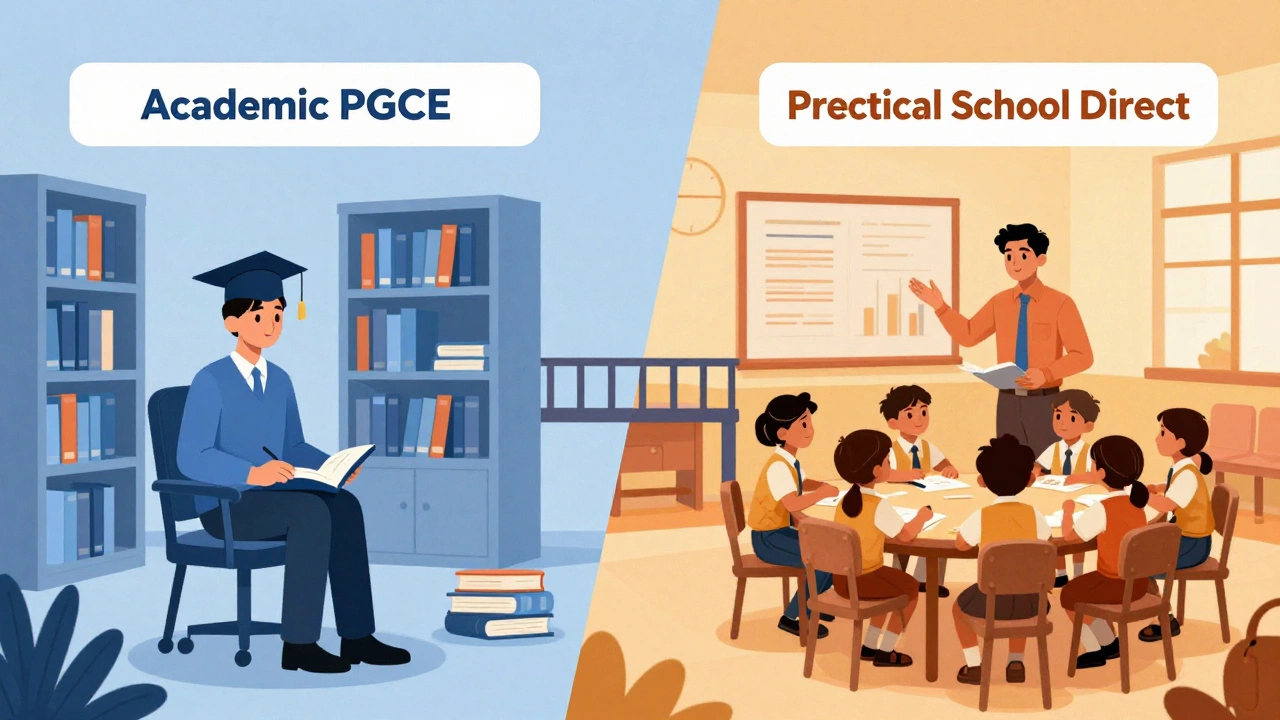
The PGCE is perhaps the most common route. It combines university-based coursework with school placements. You’ll spend roughly half your time in lecture halls studying pedagogy, psychology, and curriculum design, and the other half in classrooms applying those concepts. This route is ideal if you value the academic perspective and want Master’s-level credits that can count toward a full Master’s degree later.
On the other hand, School Direct allows you to train within a school partnership. In the salaried version, you are employed by the school as an unqualified teacher. You earn a salary while you train, which removes the financial barrier of tuition fees. However, you might not receive the same level of academic support as PGCE students. It’s a trade-off: financial security versus academic breadth.
Key Components of the Curriculum
Regardless of the route you choose, the core content of initial teacher training remains consistent. The DfE mandates specific areas of focus to ensure all new teachers are competent. Here is what you will be expected to master:
- Subject Knowledge: Deepening your understanding of the subject you intend to teach. If you’re training to teach secondary physics, you’ll revisit advanced concepts and learn how to explain complex theories simply.
- Classroom Management: Strategies for maintaining discipline, engaging reluctant learners, and creating a positive learning environment. This includes behavior policies and safeguarding procedures.
- Planning and Assessment: How to design lesson plans that meet curriculum objectives and how to assess student work to inform future teaching. You’ll learn about formative and summative assessment techniques.
- Inclusion and Special Educational Needs (SEN): Adapting your teaching to support students with additional needs, including those with English as an Additional Language (EAL).
- Professional Ethics: Understanding the legal responsibilities of a teacher, including child protection laws and data privacy.
One often overlooked component is the development of reflective practice. You will be required to keep a teaching journal, documenting your successes and failures. This isn’t just paperwork; it’s a critical tool for growth. Reflecting on why a lesson failed helps you adjust your approach for next time. It turns experience into expertise.
The Role of Mentors and Placements
You don’t train in isolation. Every ITT program assigns you mentors-experienced teachers who guide your development. Your main mentor is usually in your primary placement school, but you may also have a university tutor or a second mentor in a contrasting school setting. These relationships are vital. A good mentor provides constructive feedback, models best practices, and offers emotional support during stressful periods.
Placements typically occur in two different schools. The first placement might be in a comprehensive secondary school, while the second could be in a special needs academy or a primary school. This exposure helps you understand diverse educational contexts. For example, teaching in a rural village school presents different challenges than teaching in an inner-city urban environment. Experiencing both prepares you for any job offer after graduation.
During these placements, you gradually take on more responsibility. Initially, you might observe lessons and assist with small group activities. By the end of the year, you should be planning and delivering entire units of work independently. This gradual release of responsibility mirrors the way experienced teachers were once trained.
Financial Considerations and Support
Money is a major factor when choosing an ITT route. Some programs charge tuition fees, while others offer bursaries or scholarships. The government provides financial incentives to attract trainees into shortage subjects like mathematics, physics, and modern foreign languages. These bursaries can range from £9,000 to £28,000 depending on the subject and your undergraduate degree classification.
If you choose a salaried route like School Direct, you won’t pay tuition fees. Instead, you’ll receive a starting teacher salary, which is around £30,000 in London and slightly less outside the capital. This makes it an attractive option for those who cannot afford to study unpaid. However, remember that you are still working long hours, so the salary might feel modest given the workload.
Additionally, there are maintenance loans available for postgraduate courses if you qualify based on household income. These loans help cover living costs during your training year. It’s worth calculating your total financial package-including bursaries, loans, and potential salaries-to make an informed decision.

Challenges Faced by Trainee Teachers
Let’s be honest: ITT is tough. Many trainees report feeling overwhelmed by the volume of work. Balancing university assignments with lesson planning and marking can lead to burnout if not managed carefully. Time management becomes a survival skill. You’ll need to prioritize tasks ruthlessly and ask for help when needed.
Another challenge is the pressure to perform. You are constantly being observed and assessed. Early lessons rarely go perfectly, and receiving critical feedback can sting. But resilience is part of the training. Learning to accept criticism constructively is a key professional skill. Most trainees emerge from ITT more confident and capable than they imagined possible.
Work-life balance is another concern. With evenings spent preparing resources and weekends dedicated to grading, personal time can shrink significantly. Setting boundaries is essential. Try to disconnect from work after certain hours to maintain mental health. Remember, teaching is a marathon, not a sprint.
After Completion: What Comes Next?
Once you successfully complete your initial teacher training, you gain Qualified Teacher Status (QTS). This qualifies you to apply for teaching jobs in state schools across England. You’ll enter the profession as an Early Career Teacher (ECT), undergoing a two-year induction period. During this time, you continue to receive support and mentoring to consolidate your skills.
The job market for teachers varies by region and subject. Shortage subjects tend to have more opportunities and higher starting salaries. Networking during your placements can open doors to permanent positions. Many schools hire their trainees directly after successful completion of ITT.
Continuing Professional Development (CPD) doesn’t stop after ITT. Teaching is a dynamic field, and staying updated with new methodologies and curriculum changes is essential. Attending workshops, joining professional associations, and pursuing further qualifications like NPQs (National Professional Qualifications) can accelerate your career progression.
Do I need a specific degree to do initial teacher training?
Generally, yes. Most ITT providers require a bachelor’s degree in a relevant subject. For example, to train as a secondary history teacher, you’d typically need a degree in history or a closely related field. However, some programs accept degrees in unrelated subjects if you demonstrate strong subject knowledge through additional assessments or interviews.
Can I do initial teacher training part-time?
Yes, part-time options exist. Programs like Part-Time PGCE or School Direct Salaried allow you to work as a supply teacher while training over two years. This is ideal for those who want to keep working full-time but transition into teaching gradually. Be prepared for a heavier weekly workload since you’re balancing employment and study simultaneously.
What happens if I fail my initial teacher training?
Failing ITT is rare but possible. If you struggle, providers usually offer remediation plans to help you improve. In cases where standards aren’t met, you may be asked to withdraw. You can reapply to another program later, addressing the areas where you fell short. Persistence and self-reflection are key to overcoming setbacks.
Is QTS valid internationally?
QTS is primarily recognized in England. Other countries have their own certification requirements. However, having QTS plus a PGCE can enhance your CV for international schools, especially those following the British curriculum. Always check the specific regulations of the country where you wish to teach.
How competitive are ITT places?
Competitiveness varies by subject and location. Popular subjects like English and Primary Education may have more applicants per place. Shortage subjects like Physics often have fewer applicants but stricter entry criteria regarding subject knowledge. Applying early and tailoring your personal statement to highlight relevant experience improves your chances.
Initial teacher training is more than a box-ticking exercise. It’s a transformative journey that shapes how you interact with young minds. Whether you choose the academic rigor of a PGCE or the practical immersion of School Direct, the outcome is the same: you become a qualified, confident educator ready to make a difference. Start researching early, talk to current teachers, and prepare for a challenging but deeply rewarding career.