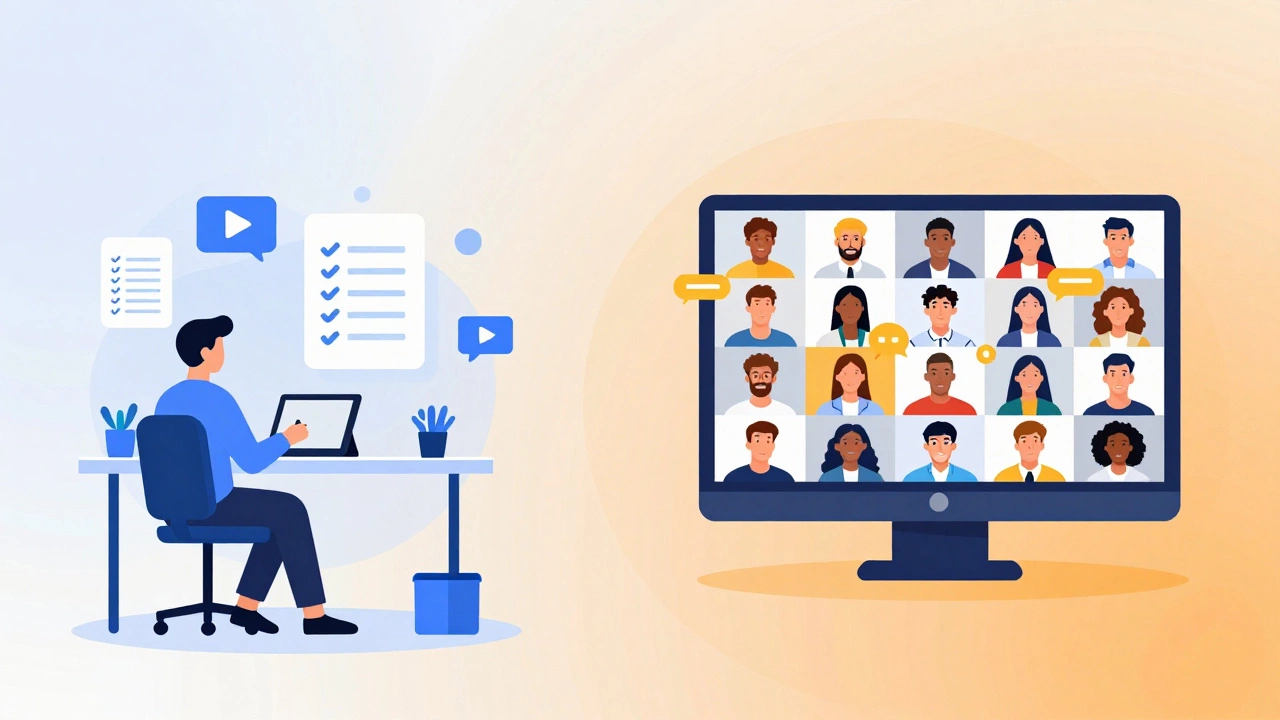
eLearning vs Online Learning: Recommendation Tool
Recommendation
Have you ever signed up for a course only to realize it wasn’t what you expected? Maybe you wanted live interaction but got a stack of PDFs. Or perhaps you needed flexible self-study materials but ended up stuck in a rigid Zoom schedule. This confusion usually stems from one thing: the interchangeable use of eLearning and online learning. While they sound identical, they represent two distinct approaches to digital education. Understanding the difference isn't just semantics; it determines whether you choose the right tool for your learning goals or your business's training needs.
The Core Distinction: Content vs. Delivery
To understand the gap between these terms, we need to look at their origins and primary functions. Think of eLearning as a structured set of digital educational content designed for independent study. It is essentially the "what"-the curriculum, the videos, the quizzes, and the interactive modules hosted on a platform. eLearning focuses on the packaging of knowledge. It is often asynchronous, meaning you consume it on your own time, at your own pace.
On the other hand, Online Learning is the broader umbrella term for any educational activity that takes place over the internet. This includes eLearning, but it also encompasses live virtual classrooms, webinars, discussion forums, and even remote tutoring sessions. If eLearning is the textbook, online learning is the entire school experience happening remotely. You can have online learning without traditional eLearning components (like a live-only seminar), but you rarely have eLearning without some form of online delivery.
| Feature | eLearning | Online Learning |
|---|---|---|
| Primary Focus | Content delivery & structure | Method of instruction & interaction |
| Interaction Level | Low to Medium (Self-paced) | High (Live sessions, peer collaboration) |
| Schedule | Asynchronous (Flexible) | Synchronous or Asynchronous |
| Tools Used | LMS, SCORM packages, Videos | Zoom, Teams, LMS, Forums, Chat |
| Best For | Compliance training, skill drills | Degrees, complex discussions, mentorship |
How eLearning Works: The Self-Guided Path
eLearning thrives on structure and standardization. When a company rolls out safety compliance training, they don’t need a live instructor for every employee. They need a consistent message delivered efficiently. This is where eLearning shines. It relies heavily on Learning Management Systems (LMS) like Moodle, Canvas, or Blackboard. These platforms host the content and track progress.
The typical eLearning module follows a linear path. You watch a video, read a short article, take a quiz, and move to the next section. The technology behind this often involves SCORM (Sharable Content Object Reference Model), which ensures that your course data moves seamlessly between different software systems. Because it is self-paced, eLearning reduces the logistical nightmare of scheduling. An employee in Manchester can complete the same training as an employee in Tokyo, both at times that suit them. However, this independence requires high levels of self-discipline. Without a teacher checking in, motivation can wane.
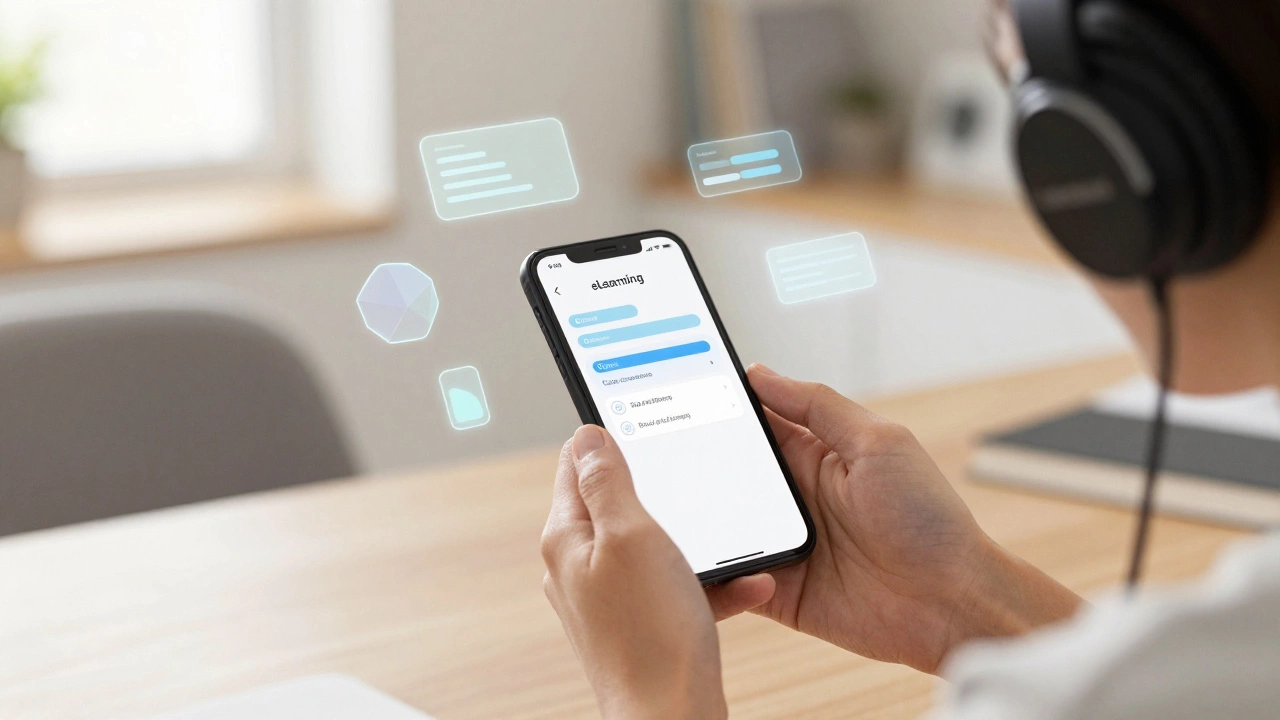
Online Learning: The Interactive Experience
Online learning expands the scope significantly. Imagine a university student taking a Master’s degree entirely remotely. They might watch recorded lectures (which is eLearning), but they also attend live seminars via Zoom, participate in group projects using Slack or Microsoft Teams, and submit papers for direct feedback from professors. This holistic approach is online learning.
The key differentiator here is synchronicity. Synchronous online learning happens in real-time. You log in at 2 PM for a lecture. You see your peers’ faces. You raise your hand virtually. This mimics the traditional classroom environment but removes geographical barriers. Tools like Zoom, Microsoft Teams, and Google Meet are central to this model.
This format is crucial for subjects that require debate, nuanced discussion, or immediate feedback. For example, learning a new language benefits immensely from speaking with a tutor live rather than just listening to audio clips. Online learning fosters community and networking, elements that pure eLearning often lacks. It bridges the social gap of distance education.
Which Approach Fits Your Needs?
Choosing between eLearning and online learning depends on your specific objectives. Are you trying to scale knowledge across a large workforce, or are you trying to build deep expertise through mentorship?
Choose eLearning if:
- You need to train hundreds or thousands of people simultaneously.
- The content is factual and doesn’t require much interpretation (e.g., software tutorials, policy updates).
- Budget constraints limit the ability to hire live instructors.
- Learners have irregular schedules and need maximum flexibility.
Choose Online Learning (Synchronous) if:
- The subject matter is complex and requires discussion (e.g., leadership skills, ethics).
- Networking and peer interaction are part of the value proposition.
- You need to assess understanding through live Q&A or presentations.
- Accountability is a concern, and live attendance helps keep learners engaged.

The Blended Future: Hybrid Models
In practice, the line between eLearning and online learning is blurring. Most modern educational programs use a blended approach. A corporate training program might start with self-paced eLearning modules to cover the basics, followed by a live online workshop to tackle case studies and answer questions. This hybrid model leverages the efficiency of eLearning and the engagement of synchronous online learning.
Technology continues to bridge this gap. AI-driven tutors can now provide personalized feedback in eLearning environments, making them feel more interactive. Conversely, online learning platforms are integrating more robust eLearning libraries, allowing students to review missed live sessions easily. The future isn't about choosing one over the other; it's about orchestrating both to create a seamless educational journey.
Common Misconceptions
One major misconception is that eLearning is always inferior because it lacks human contact. This ignores the power of well-designed instructional design. A poorly run live online class can be far less effective than a meticulously crafted eLearning course with engaging simulations and clear assessments. Quality matters more than format.
Another myth is that online learning is only for higher education. In reality, vocational training, professional certifications, and even hobby classes utilize online learning extensively. From coding bootcamps to cooking classes, the internet has democratized access to expert instruction beyond just universities.
Is eLearning the same as distance learning?
Not exactly. Distance learning is a broad term that includes correspondence courses (mail-based) and online methods. eLearning is a specific type of distance learning that uses digital technology. All eLearning is distance learning, but not all distance learning is eLearning.
Can I get a degree through eLearning?
Yes, many universities offer fully online degrees. However, these programs typically combine eLearning materials (recorded lectures, readings) with online learning elements (live seminars, exams). Pure eLearning without any live interaction is rare for accredited degrees due to accreditation requirements for assessment and engagement.
Which is better for employee training: eLearning or online learning?
It depends on the goal. For compliance, onboarding, and technical skills, eLearning is more cost-effective and scalable. For soft skills, leadership development, and team building, synchronous online learning is more effective because it allows for real-time feedback and interpersonal dynamics.
Do employers value online learning credentials?
Absolutely. As long as the institution is accredited, employers generally view online degrees and certifications equally to on-campus ones. The focus has shifted to the skills demonstrated and the reputation of the provider rather than the mode of delivery.
What technology do I need for eLearning vs. online learning?
For eLearning, you mainly need a stable internet connection and a device capable of playing videos and accessing web browsers. For synchronous online learning, you will likely need a webcam, microphone, and headset to participate effectively in live interactions and group work.